
'Die My Love' Review: Jennifer Lawrence Roars With Power in Lynne Ramsey's Potent Postpartum Psychodrama
From what I've seen of Lynne Ramsay’s work (You Were Never Really Here and We Need to Talk About Kevin), she centers on the various endpoints of derealization. Those films were male-centric, even if one of them featured a mother’s point of view. Her long-awaited — wait, it's been eight years since her last movie? I remember seeing it via MoviePass like it was yesterday — follow-up, Die My Love, starring Jennifer Lawrence and Robert Pattinson, throws you into the deteriorating mindset of a punkish city girl in postpartum psychosis in her partner's rural family home. It's not just about motherhood and losing one's agency; it explores how derealization and being out of one's element can push someone into a downward spiral without any safety nets.
Frankly put, a rural generational house of sorrow is no den for a wild stallion.

Image copyright (©) Courtesy of Mubi
MPA Rating: R (for sexual content, graphic nudity, language, and some violent content.)
Runtime: 1 Hour and 59 Minutes
Language: English
Production Companies: Black Label Media, Excellent Cadaver, Sikelia Productions
Distributor: Mubi
Director: Lynne Ramsay
Writers: Enda Walsh, Lynne Ramsay, Alice Birch
Cast: Jennifer Lawrence, Robert Pattinson, LaKeith Stanfield, Nick Nolte, Sissy Spacek
U.S Release Date: November 7, 2025
A freaky and frisky (the movie begins with them on all fours in the fields sniffing each other like animals in heat) novelist, Grace (Lawrence), and musician Jackson (Pattinson) relocate from NYC to Montana. They say “screw it” to NYC's rent as they inherited Jackson's late uncle's family home. It's run-down and punkish, like them. They see it as the perfect place for her to write the next great American novel, him to work on his songs, and, of course, both of them to live frivolously. But the euphoric millennial freedom is put on pause as Grace gives birth to a baby boy. Jackson goes into work mode in some unspecified place, and Grace becomes a stay-at-home mom. In his absence, the offspring’s infantry, and literally no one around them for miles, Grace faces postpartum psychosis. Hell, Jackson even drops a mangy, constantly barking dog on her. As time goes on, Grace slowly slips deeper into madness until she is reduced to her most basic instincts.
In Die My Love Jennifer Lawrence portrays postpartum psychosis and primal rage captivatingly.

Jennifer Lawrence in Die My Love ©MUBI Credit Kimberley French.
Man, Jennifer Lawrence is not meant to live in rural areas. Unlike Darren Aronofsky's biblical Mother!, Ramsay's Die My Love is akin to a prison experiment. It's a harrowing examination of an exuberant woman's eroding grasp on reality. Going from NYC to rural Montana — I would not wish that on my worst enemy — the distressing reveals of the generational neglect and trauma that stemmed from the house's history, and the emotional distance from her partner, continue the same cycle.
There may be many movies about the early days of motherhood, but Die My Love stands out because of Grace's character. It's a fascinating portrait that makes me feel like a kid in a psychology class conducting my own study, given how hauntingly visceral and raw Ramsay's lens is. She emanates a sense of dread, madness, and even claustrophobia in the isolation, with the postpartum psychosis being an added measure.
Through each intimate scene, Lawrence, with a dazzling display of primal rage and fervor, is most captivating as those low-patience New Yorker mannerisms clash with the country culture. Lawrence's emotional portrayal of Grace as she confronts body image issues, ennui, paranoia, isolation, and raging hormones is deeply felt as her bold, animalistic expressions and body movements instinctively texture scenes that deconstruct the pillars of PPP.
Ramsay relates the location to Grace's deteriorating mental health; she also adds Jackson's special familial ties and neglect as a factor.

Jennifer Lawrence, Robert Pattinson in Die My Love ©MUBI Credit Seamus McGarvey
In fleeting flashbacks regarding his family, you piece together why Jackson is emotionally distant. One scene in particular sees Grace taking solace in Jackson's father, Harry (Nick Nolte), who had dementia. Yet during one of his bouts, he shares details of the house's history, which belonged to his brother who committed suicide. In the present, Harry has passed, and Grace looks to Pam (Sissy Spacek) for emotional support, who simply can't give it to her as she's in a grieving psychosis. Sissy Spacek returns to her scary Carrie persona in one scene, strolling aimlessly across the open, ghastly fields in a sleepwalking spell, wielding the same shotgun she goes to sleep with, as her disturbed and paranoid late husband used to.
As more details surface about the family's troubled past, their house itself materializes into a character — one that takes on an antagonistic personality as a supernatural life force sucker. I adore how in this portrait of motherhood, the baby is the least of their troubles. Lawrence's assured delivery of, "My baby is perfect,” to curious minds sends chills; it's the lack of emotional support in her orbit pissing her off.
Ramsay's fever dream experience is characterized by a hallucinatory nature, elevated by Seamus McGarvey's gothic cinematography. It stands in stark contrast to the savage symbolism of rage and untamed animals. As with You Were Never Really Here, it's difficult to determine which parts are real or the product of the protagonist's imagination. For example, LaKeith Stanfield plays an enigmatic biker who, with every appearance, grows closer to Grace in a companionship that doesn't even feel connected to reality.
It's a testament to how far Jennifer Lawrence and Robert Pattinson have grown as performers, considering my chronically Gen-Z ass didn't view this casting as fulfilling the "Katniss and Edward crossover.” Despite being more of Lawrence's vehicle, the film features a good Pattinson, who has gained a reputation for animating unhinged physicality. He's fluent in displaying that apathetic demeanor caught between love and neglect for his partner. But Pattinson’s character isn’t present enough to form an emotional connection. It lacks a depiction of their romance cues beyond the opening montage. As a result, moments such as Jackson's question, "Where is Grace?" during an impromptu drive, and her response, “I'm right here, you just can’t see me,” fails to deliver an emotional impact.
Die My Love isn’t as powerful as prior Ramsey works
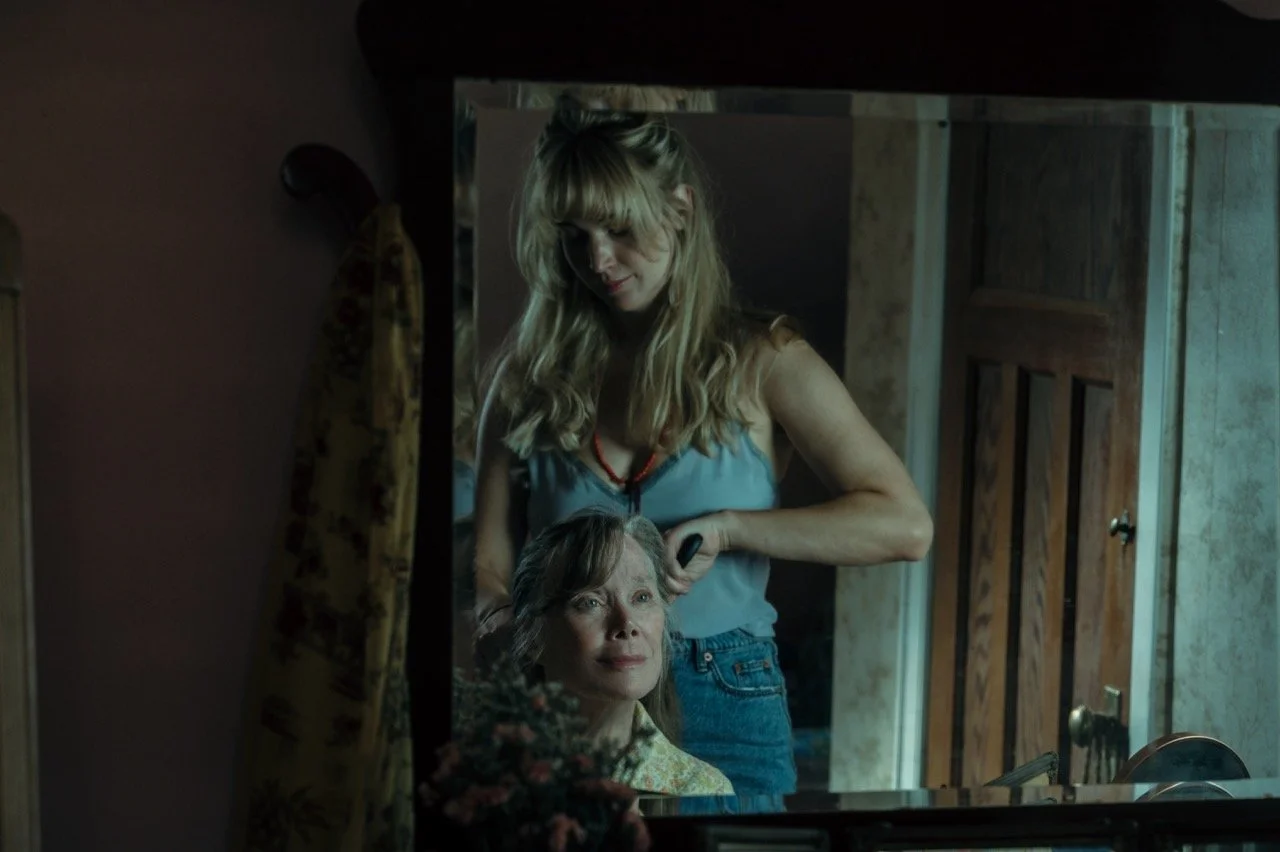
Jennifer Lawrence, Sissy Spacek in Die My Love ©MUBI Credit Kimberley French.
Out of all the character portraits, Die My Love is Ramsay's most minimal and most psychologically raw. However, it's the weakest of her offerings. Yes, the deterioration of a woman’s mental state is the point, but I expected more from Ramsay. The film was more reliant on Lawrence’s impeccable portrayal than on the character writing. Nevertheless, it had me wondering afterward, introspecting about my own sense of derealization. What are my impulses and behavioral cracks that go into my psychosis? What about every mother who’s faced loneliness? Reader, what’s yours?
Please consider supporting Rendy Reviews. We’re an independent run, Gen-Z and Black-owned entertainment outlet. You can donate to our Paypal or Venmo to help keep our site running. Or become a subscriber for access to 13-years worth of reviews, exclusive interviews, and more! A free way to support is a sign up for the Rendy Reviews’ newsletter and get weekly emails about latest on movie reviews, interviews with film artisans, features, and more.
