
'Coyote vs. Acme' Review: Wile E. Coyote Gets His Day in Court in a Glorious, Surprisingly Moving Looney Tunes Triumph
No matter how much you smash him, dash him, explode him, or even shelve him, you can’t keep a good Wile E. Coyote down.
Forget Odysseus; Coyote vs. Acme’s road to theaters was something a modern‑day Homer would pen. For a straightforward anti‑corporation tale about greed that’s not as meta as you might think, the film’s real‑life saga adds an extra layer of flavor that worked in the film’s favor. TLDR (if you were living under a rock): Dave Green’s long‑awaited Looney Tunes courtroom comedy, based on the 1990 New Yorker article by Ian Frazier, faced an uphill battle to reach theaters thanks to none other than David “suck on that tax write-off teet” Zaslav, the Scrooge incarnate of cinema. He shelved the film, and when buyers were interested in acquiring it, WB kept raising the price. Now, through Ketchup Entertainment (which also saved the delightful The Day the Earth Blew Up from write‑off hell a few years back), this once‑doomed flick arrives without needing to say “that’s all, folks.”
I’m going to keep it real with you, chief: this was my most anticipated movie of the year. Not just for the quest to get it distributed, but because I’m a Looney Tunes fan. It’s a pleasure to say, this was worth the wait. I had no doubt Coyote vs. Acme would be good, but I didn’t expect to be deeply moved by it. Space Jam could never.
MPA Rating: PG (for cartoon violence and some language.)
Runtime: 1 Hour and 41 Minutes (101 minutes)
Language: English
Production Companies: Warner Bros. Pictures, Warner Bros. Pictures Animation, Lin Pictures, Two Monkeys, A Goat and Another, Dead Monkey
Distributor: Ketchup Entertainment
Director: Dave Green
Screenwriters: Samy Burch
Cast: Will Forte, John Cena, Lana Condor, Tone Bell, Eric Bauza, P.J. Byrne, Martha Kelly, Luis Guzmán, Kenneth Choi, John Early
U.S Release Date: August 28, 2026
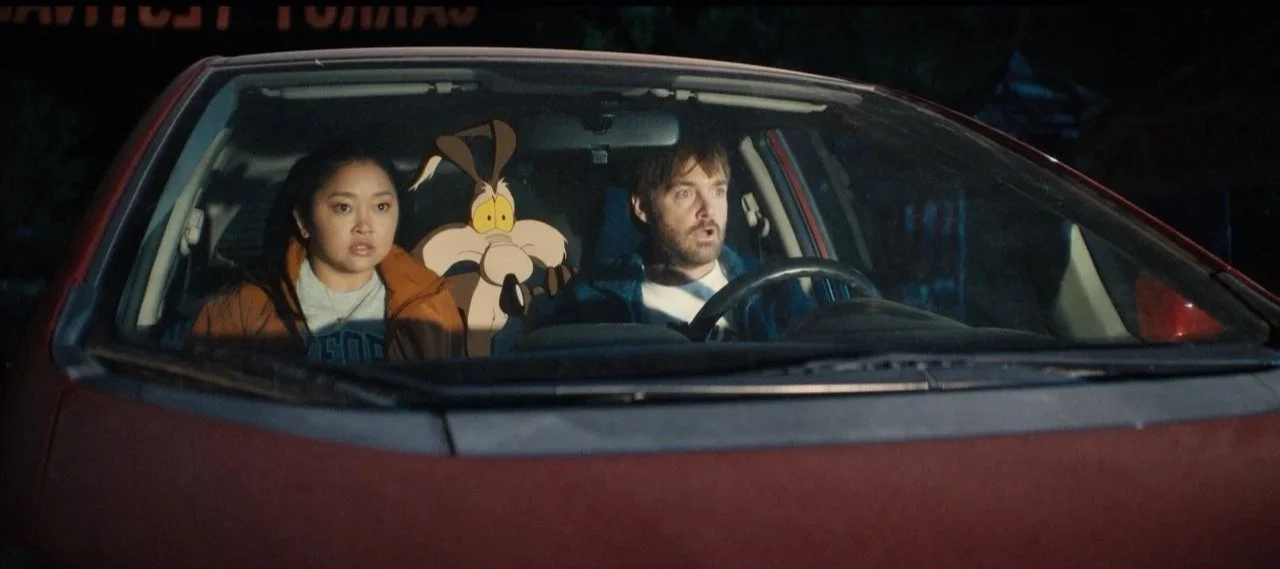
Wile E. Coyote has spent decades using Acme products to catch his elusive adversary, the Road Runner. Each device blows up in his face (literally) or causes other cartoonish slapstick mutilation. Exhausted after another failed attempt, he catches an ad for a small‑time law firm, “Avery, Jones & Maltese” (a loving tribute to the heyday Looney Tunes’ giants: Tex, Chuck, and Michael), on his TV in his homely cave full of defective Acme products. He heads straight to their Albuquerque office to hire Kevin Avery (Will Forte) as his lawyer against Acme. A deadpan Kevin intends to settle for chump change, but the silent yet expressive Coyote escalates things. Acme’s haughty top lawyer and Kevin’s former law school pal, Buddy Crane (John Cena), gets involved and tries to settle for 50 grand. But Coyote wants his day in court. Forced out of his comfort zone, Avery must build a case against Acme alongside his spirited niece Paige (Lana Condor), leading him to uncover a loony criminal plot bigger than Wile’s schemes.
Dave Green finally gives the Looney Tunes the big-screen treatment they deserve.

Will Forte and Wile E. Coyote in Coyote Vs. Acme.
Coyote vs. Acme’s first several minutes alone – where a classic Coyote vs. Road Runner sequence takes place on a cinematic scale, with David Green (Earth to Echo, Teenage Mutant Ninja Turtles: Out of the Shadows) translating practical effects for their animated mayhem – instantly surpasses the overall quality of every Looney Tunes live-action/animated cinematic venture to date. Directionally, he nails the anarchistic spirit of the Merrie Melodies characters in swift comedic timing and gags throughout better than even Joe Dante did with Back in Action. Tapping into his action core from TMNT and the influence of Robert Zemeckis’ Roger Rabbit filmmaking style, Green showcases great stunt work, especially against volume-averse, on-location filmmaking, blurring the line between DNEG VFX and actual blocking, and enhancing the plausibility of its toon/human world.
DNEG’s animation is impressive, despite my typical ambivalence toward the “3D character model wearing a 2D coat” technique (as seen in Tom and Jerry or Chip ‘n’ Dale: Rescue Rangers). In addition to perfectly capturing the comedic slapstick timing with the 3D models, the animators evoked a complex character performance from the mute, sign-wielding canine inventor through his facial expressions and signature signs. There are times when the 3D models on other toons aren’t completely polished, which shows in awkward poses. And it’s not like the Looney Tunes couldn’t have been in 2D, especially when Bugs Bunny, showing up as a mysterious informant, appears in all his hand-drawn glory, as if he personally told the studio they weren’t going to 3D character-model him again after Space Jam: A New Legacy.
Will Forte, John Cena, Lana Condor, and P.J. Byrne – a comically adept cast whose upbeat comedic style is a perfect union of Looney Tunes – all understood the assignment and brought A-plus exuberance in their roles. Forte, leading the pack, delivers some career-best character work (sorry, MacGruber), trading his signature silly persona for a somber, defeated lawyer affected by the system, wanting to operate within his safety “settlement” net. But against this silent animated coyote, practically speaking to nothing, Forte reaches a Bob Hoskins tier and brings the realm to life with his manic straight-man portrayal. The film finds a strong emotional bond, and the budding slow-burn-to-actualization lends to big emotional swings, shockingly landing (one monologue regarding his admiration for Wile’s resilience nearly made me shed tears).
Coyote Vs. Acme is Roger Rabbit for the late-capitalist hellscape.

John Cena and Foghorn Leghorn in Coyote Vs. Acme.
The film truly comes alive through Samy Burch’s (May December, Late Fame) fiery pen. Sharing a story credit with James Gunn and Jeremy Slater, she unfolds a grounded (weird, huh?) reality where toons and humans coincide. The toons are second-rate citizens, nonchalant about whatever animated occurrences surround, demean, or discriminate against them. Burch, who has boldly satirized class and cultural dynamics through characterization, provides shocking details that have no right of being so intellectual. Coyote’s continuous chasing habit is called out as an addiction; there’s discriminatory language against toons, and a menacing Foghorn Leghorn (Eric Bauza in his best Tunes voicework to date) is positioned in the antagonistic role as the ACME CEO. Giving an Elle Woods “What, like, it’s hard?” energy, the writing is uproariously funny and has a sophisticated, clever mystery surrounding its detailed world, although the plot tends to hit repetitive notes of the situation at hand (this was conceived for HBO MAX, after all).
The Roger Rabbit influences are well worn in its craft, but it goes beyond by shedding a harrowing light on modern issues, mostly regarding working‑class exploitation. Coincidentally, I watched this film sandwiched between Rory Kennedy's Boeing takedown docs (Downfall and Freefall), which illustrated the same themes. In Freefall, a Boeing factory worker describes how his tire was slashed in response to internal whistleblowing, which is frighteningly similar to a sequence of Coyote evading a blond‑haired assailant the day before his congressional hearing.
After a certain point, the humor ceases to be amusing, sometimes to its own detriment, and the film becomes genuinely tragic. Yet by doing so, its radical undercurrent explodes like the bombs blown up in Wile E.’s face.
Coyote vs. Acme is the social satire we need now more than ever. It’s a masterpiece of mayhem, heart, and righteous fury – and easily one of the best films of the year. In this desolate, late‑capitalist era, where greed and incompetence impact our daily lives, the film’s American underdog tale of not taking gruff from megacorps – with its own real‑life underdog story to boot – is a moving, motivating triumph. Timely for families, serving as the best court procedural flick released this decade thus far (I think I just saw Wile E. Coyote drop an anvil on Aaron Sorkin), and the best Looney Tunes have been interpreted on the big screen since Roger Rabbit.
