
Black Christmas Review
PG-13: Violence, terror, thematic content involving sexual assault, language, sexual material, and drinking
Runtime: 1 Hr and 32 Minutes
Production Companies: Blumhouse Productions, Divide/Conquer
Distributor: Universal Pictures
Director: Sophia Takal
Writers: Sophia Takal, April Wolfe
Cast: Imogen Poots, Lily Donoghue, Aleyse Shannon, Brittany O'Grady, Caleb Eberhardt, Cary Elwes
Release Date: December 13, 2019

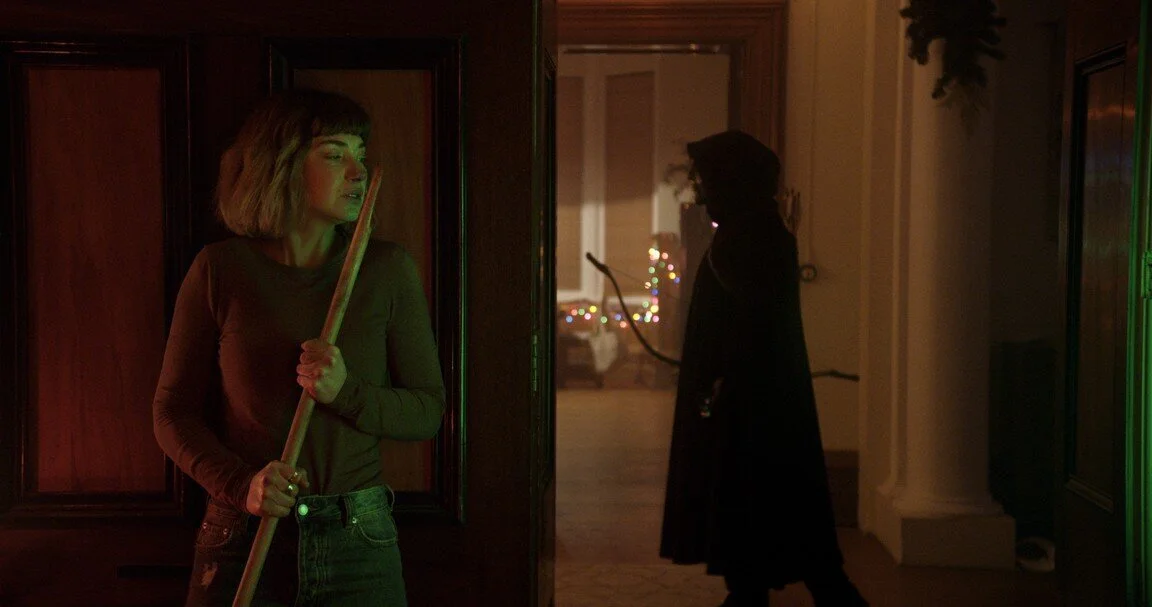
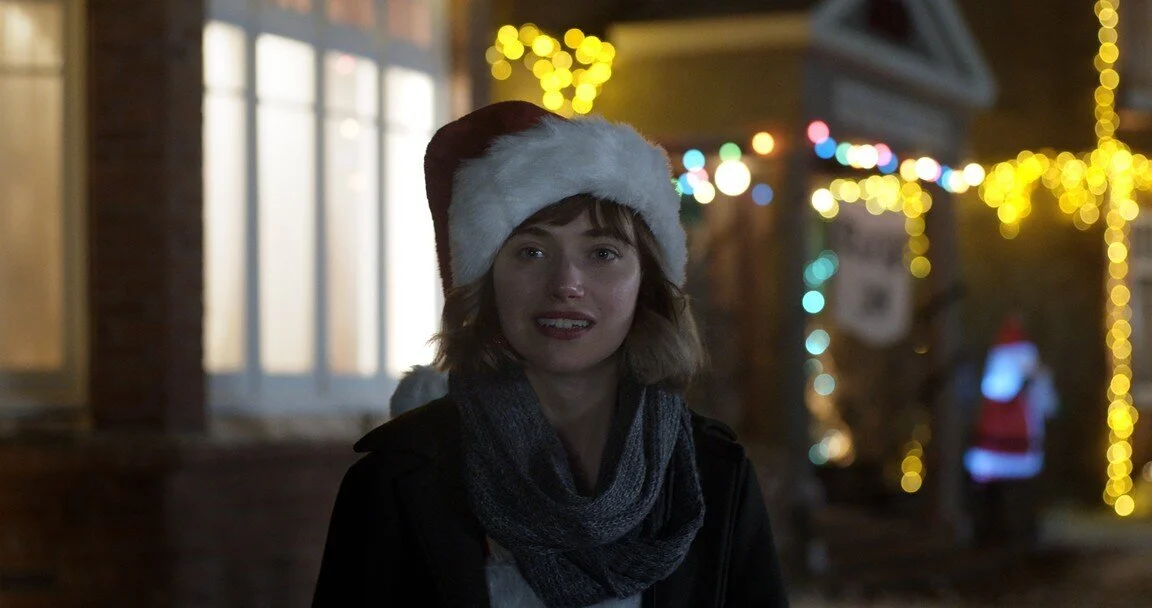
Riley, a sorority student at Hawthorne College is one of the most quiet and timid people in her group… and who can blame her? She’s in the process of recovering from a sexual assault where the president of the fraternity AKO raped her and no justice was served. After doing her own take on a Christmas carol alongside her sisters at a show run by the frat — calling them out for the shit that they did in the meanwhile — the sorority girls of MKE are targeted by masked figures and become the victims to suspicious supernatural murders on campus. Now it’s up to Riley and her sisters to stop the killers before the girls in every sorority are killed.

Honestly, I don’t know how to review this. It’s kind of challenging. Hell, I’m scared. I tried to take my editor Myan (aka Queen of Horror) to this and, thanks to the good people of the MTA, she was delayed and couldn’t attend the press screening with me, leaving me on my lonesome. She would’ve been my point of reference because I still don’t know how I feel about it. The positives thoroughly outweigh the negatives, but… ehhhh, I don’t know!
I’m unfamiliar with the Black Christmas films. We had the 1974 version, which was simply about sorority girls getting killed for no logical reason. Then, you had the 2006 remake, which I heard is terrible. Both films — written and directed by men, obviously — lacked a certain flavor… a feminine touch, if you will. Writer/director Sophia Takal and co-writer April Wolfe took this horror “classic” and spun it for a contemporary era to make it relevant as hell for the women of today: #MeToo. This movie unapologetically bashes you in the face with its feminist perspective and, in terms of execution, it works. Takal and Wolfe had a clear idea of what they wanted this remake to be about — discussing rape culture as its primary theme — and they fully commit to it for a meaningful effect that manages to be entertaining.
From a direction standpoint, Takal takes clear inspiration from the aesthetic of a classic horror film by implementing an organic slow burn to keep the story flowing at a smooth pace given its 92-minute run time. As the story progresses, a good majority of it is fleshed out as it focuses on Riley navigating through the mysterious supernatural elements that are plaguing her sisters. As a slasher flick, its conventional horror beats lack thrills, but it still gives you a sense of tension and dread, especially since it’s set on women who are stalked by these figures. Women being stalked is a very real and chilling concept by default, so watching those sequences play out through Takal’s vision with long takes to deliver a grim sense of dread effectively makes your skin crawl as these girls get picked off one by one. Are the executions effective? Not really. It’s a PG-13 horror and a lot of the kills are often silly or banal, but it gets the job done. The slasher elements are pretty basic, but that’s fine! You have a variety of options to choose from when it comes to this brand of horror. The main antagonist of this film is not just man, but the dominance of man. It’s the superiority of power they have over women who have evolved beyond their primitive traditional ways of thinking. There’s a subplot regarding a professor who only chose to explore works by male authors in the midst of getting fired because of a sorority sister named Kris. At first, I had problems with this African-American super SJW who is unaware of some of her own negative actions. Her sisters — mostly Riley — do call her out on her bullshit. But, regarding the professor, the presence of this traditionalist at the institution forms its own subtext that aligns with the overall theme.
If you are a sexual assault survivor and you go see this, be warned that there are depictions of sexual assault. The movie may be PG-13 but it doesn’t come with a TW.

This isn’t necessarily a criticism of the film… it’s criticism directed at you. Oh, yes. You. If you’re a male and you’re reading this while thinking something narrow-minded or comparing it to other female-centric horror flicks, questioning why this needed to force in a feminist message in a remake of a “classic”… congratulations. You are the problem. Black Christmas is unapologetically in your face with its take on the realistic rape culture at college campuses that you either accept or… just fuck off. At first, I felt overwhelmed by its message because it bears no subtlety whatsoever, but then again, not everything needs to be subtle. Some movies are straightforward and to the point. In this time of the #MeToo era that we’re living in now, silence is unacceptable. So, seriously, if you are a man and you’re giving this movie shit because it doesn’t bode to your binary norms of the traditional horror movie, you might need to look at yourself in the mirror. The movie cleverly calls out how whenever a woman does something to promote female empowerment and it goes viral, they receive nothing but hate and threats, which this film has been getting ever since its announcement… so yeah, screw y’all.
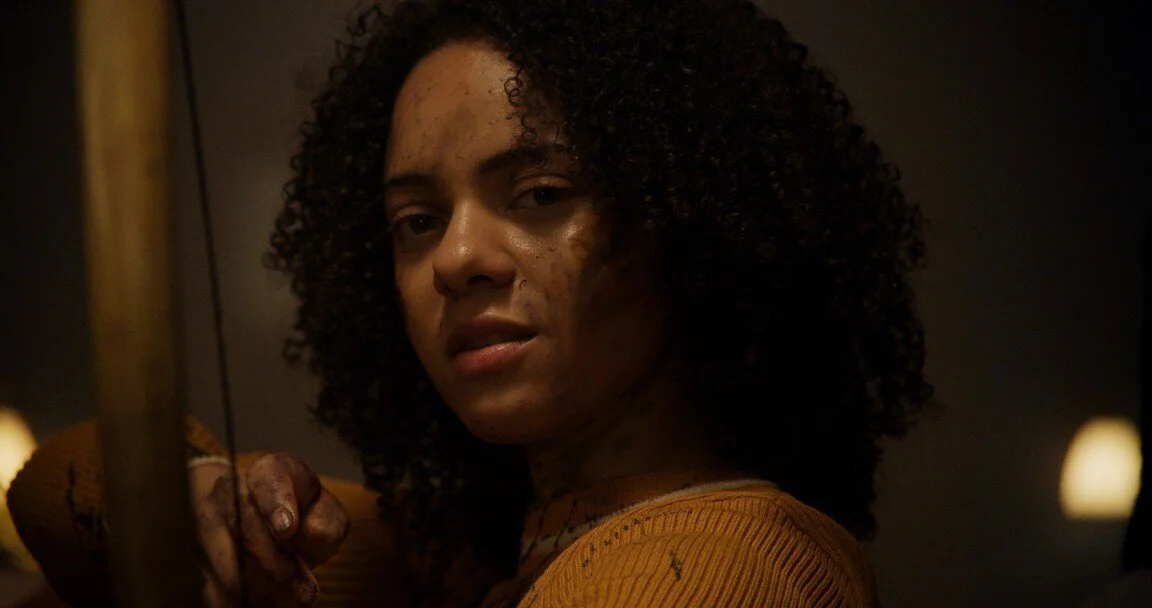
That said, I truly wish this wasn’t a Blumhouse movie or that Takal and Wolfe took their time fleshing out the characters while penning the script. I commented on Kris, who got on my nerves a bit, for she is overbearing. Every other supporting character aside from Riley is one-note to an underwhelming extent. The film started so strong emphasizing, the bond between Riley and her sisters, having her be the den mother to everyone, and then it just drops pointless facts about her that are never revisited. They begin by revealing that she’s an orphan as a means to explain why Riley stays behind during winter break at the sorority house. They also try to build a romance between her and this awkward Black guy named Landon, which doesn’t necessarily go anywhere. But I give it this: No Black people were harmed in the execution of this horror. Thank you Sophia and April for thinking of us. I’m not gonna lie, this might have my favorite exchange of 2019 where Riley sees Landon in her cafe and smiles at him. Then enters her White frat bro abuser from the side door and her smile immediately turns into a frown.
I felt the editing could’ve been tighter. There are ample scenes where moments of silence would linger for a bit too long, making for a ton of awkward pauses within the story. I get it’s supposed to reflect the slow campiness of ‘70s-style horror, but somehow the editing feels too clunky. It feels like an assembly cut that was rushed to completion to an extent that the ADR is glaringly off at times. As much as I enjoyed this, the climax is where things got silly. This bears an exposition like a Scooby-Doo plot that is so… dumb. For something that had a strong, unconventional message paired with certain slasher elements, I thought it would all work itself into the finale, but god, it’s just so poorly written.
All in all, Black Christmas is the horror flick women deserve to see right now. It doesn’t fall into the standard norms of slashers as it takes a classic and introduces it to the #MeToo era, but it deviates from basic elements to be its own thing and I respect that. If you’re going to see a #MeToo movie that matters this weekend — you’ve got this and Bombshell — pick the one with actual female filmmakers behind the scenes… Black Christmas.

