
Apollo 11 Review
G
NEON, CNN Films
1 Hr and 33 Minutes
Dir: Todd Douglas Miller
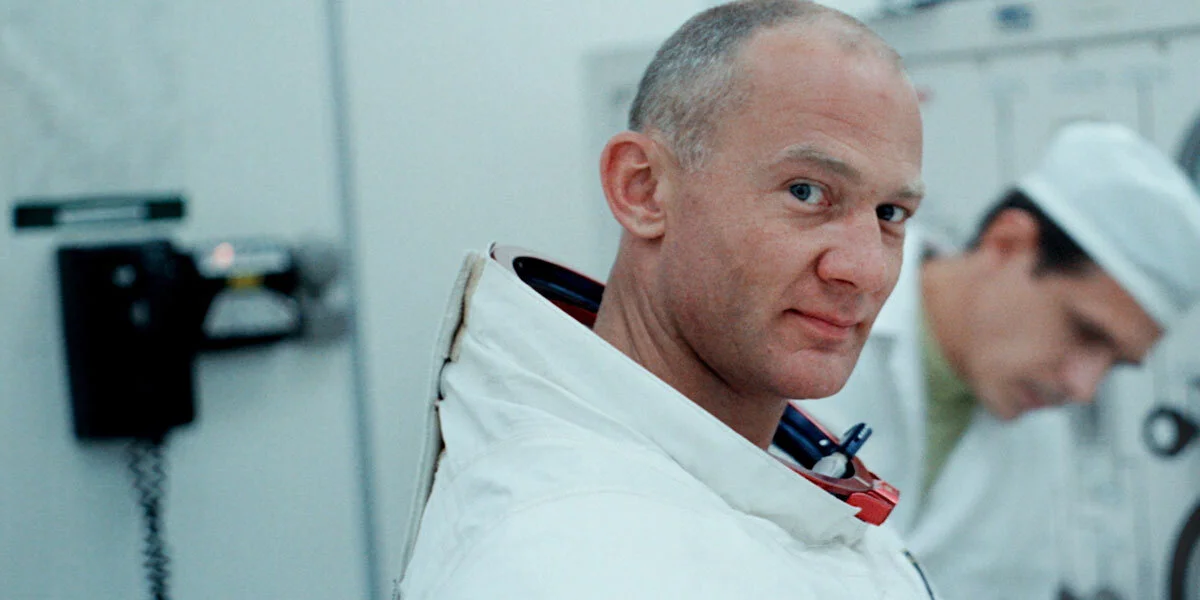
From director Todd Douglas Miller (Dinosaur 13) comes a cinematic event fifty years in the making. Crafted from a newly discovered trove of 65mm footage, and more than 11,000 hours of uncatalogued audio recordings, Apollo 11 takes us straight to the heart of NASA’s most celebrated mission—the one that first put men on the moon, and forever made Neil Armstrong and Buzz Aldrin into household names. Immersed in the perspectives of the astronauts, the team in Mission Control, and the millions of spectators on the ground, we vividly experience those momentous days and hours in 1969 when humankind took a giant leap into the future.

To restore footage from 50 years ago and present it to a modern audience is no easy feat. It’s a time-consuming process and it shows. In 1990, Martin Scorsese founded The Film Foundation which was an initiative to preserve damaged or lost films and restore them to a high definition quality. The primary way to find lost films was to dig through archives. It is a serious subject that circulates in cinema today that average moviegoers tend to ignore, primarily because they aren’t aware of it. If they aren’t aware yet, then surely Todd Douglas Miller’s Apollo 11 will make it widely known. With each mesmerizing frame, the sheer amount of effort put into this project becomes visible as Todd Douglas Miller presents one of America’s most notable accomplishments: the first men to walk on the moon in nothing but 65mm, 16mm, and 35mm archival footage that was digitally scanned at resolutions up to 8K that makes for a cinematic experience unlike anything you’ve seen before. To the cinephiles reading this, I bet your mouths are watering like this just reading the technical aspects:

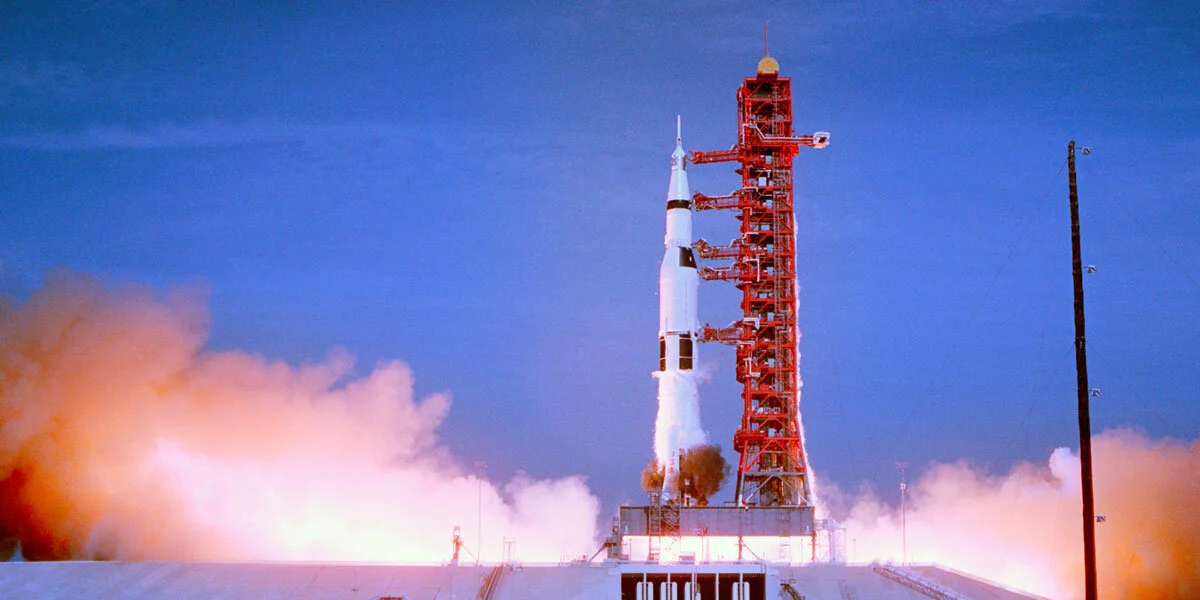
Right when the film opens, you step into a time capsule and are transported to July 20, 1969 and immediately put into the passenger seat of the mission. Whether the footage is set in the spacecraft where Neil Armstrong, Buzz Aldrin, and (lesser known, unfortunately, for he was the pilot who stayed on the craft) Michael Collins were strapped in, one of the command centers, or even the spectators watching the craft launch, you are immersed into each setting. With over 11,000 hours of audio from the different bases located in Florida, Texas, and SPACE, it’s remarkable how Miller was able to condense a five day mission into an hour and a half feature. It might seem as if the film chronologically displays the highlights of each day post launch, but it fluently tells a historical story in a revolutionizing form of documentary filmmaking. In all honesty, Apollo 11 completely reshapes the medium of the documentary genre, for it bears absolutely no interviews and is presented as a normal narrative feature.
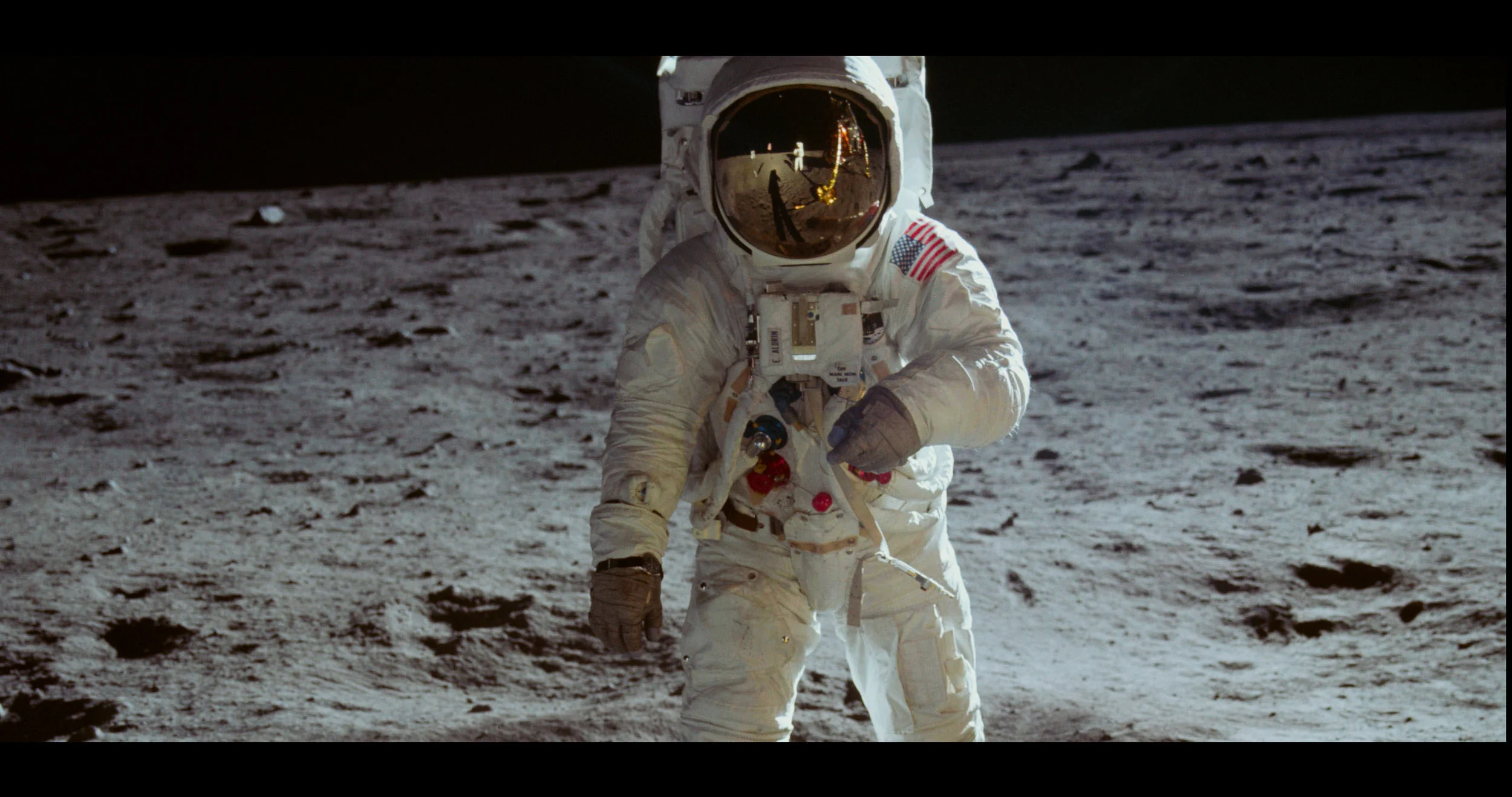
There are so many puzzle pieces to this film that fit perfectly, besides its magnificent presentation, but one of the major aspects is the editing. Aforementioned, Miller condensed hours upon hours of footage into 90 minutes, but he incorporates his own technique to keep the story moving at a fast pace. There were two mission control bases that were in contact with the astronauts and he makes these conversations flow through split screen where footage from two different bases will play right next to each other as they both make sure the trio is okay on their route. Even when Miller isn’t using the footage (which is sparse) there would be brief animated sequences to accompany the audio and display the route of the spacecraft. Another thing about the editing that I love is the consistent shot composition where the selected footage isn’t just new never-before-seen shots, but also shots taken from different angles in each recorded camera. It plays upon your disbelief so much you assume something had to be CGI. There is a long and beautiful wide shot that displays the scale of the shuttle compared to the moon and by that point you’re screaming:

Not to give much away, but there is an incredible music montage set to John Stewart’s “Mother Country” and the way that scene concludes is so incredible that it just makes me want to time travel to next year’s Academy Awards and nominate this for Best Film Editing. It’s that effective.
With a running time of 93 minutes to tell the story of this five day mission, the film runs at an incredibly fast pace. By the time it’s over, you just want to relive it all over again. Many might state the film as a companion piece to First Man because of the subject matter, but for me this is a perfect companion piece to Alfonso Cuaron's Gravity. Both films are 90 minute space adventures that are so immersive from a technical aspect and have breathtaking visuals. While First Man had stunning sequences, especially towards its climax, it didn’t measure up to either of the aforementioned features.
Another working aspect of the film was the original score by Matt Morton which accompanies the visuals perfectly. While we all know the mission was successful, there are moments where you are anxiously at the edge of your seat and that mostly stems from Morton’s score blaring over the intense conversations. It makes this cinematic experience even more cinematic. Plus, for the score he used a classic 1968 Moog Synthesizer IIIc which adds a layer of authenticity to the film. It bears the same sound you would hear in classic thrillers during that age in cinema where scores were all experimental and techno.

Remember back in high school or middle school where you would have a school trip to the theater to watch some historical film that was mostly funded by the studio? The most recent example that I can remember doing this for was Ava DuVernay’s Selma. Back in middle school, my trip was to go see Red Tails (which I passed on). But I hope that when this releases NEON does an initiative to invite middle schools, or even elementary schools (because this movie is very clean content-wise), to see this on the big screen. Not only is this the perfect history lesson, but it’ll blow those kids’ minds and set them on a path to either want to be an astronaut or a filmmaker. If I was in grade school again and I saw Apollo 11 in a movie theater, it would’ve blown my mind.
Time for a funny story. So, I got the chance to see Apollo 11 back home in NYC prior to the festival premiere. I brought a canned Starbucks refresher with me. Because it didn’t fit in the AMC theater cup holder, I put it on the floor next to my aisle seating. Then, director Todd Douglas Miller and his film rep entered the auditorium to introduce the movie. Unfortunately, after a few steps from the entrance and down my aisle, Miller accidentally kicked down my can and the liquid spilled down the aisle. Immediately a rush of red embarrassment came across my face as every press critic turned to look. After the introduction and the film began to run, Miller came up to me and asked what I was drinking. I told him it was the Starbucks refresher and he immediately went to the Starbucks adjacent to the theaters and got me a new can. We stan generosity.

Ground control to major doc, Apollo 11 is a remarkable cinematic experience that is breathtaking to witness and redefines the medium of documentary filmmaking.
Rating: 5/5 | 97%

Super Scene: Mother Country
