
'After the Hunt' Review: Luca Guadagnino's Pretentious Misfire of a #MeToo Psychodrama
Luca Guadagnino teaming up with Andrew Garfield, Ayo Edebiri, and Julia Roberts – the A-listers of their respective generations – should be prime for peak cinema. Unfortunately, they’re bottled up in After the Hunt, an overlong campus-set drama about… *squints eyes* something. You would think it’s about a professor being caught between a serious #MeToo accusation from her mentee and her colleague bestie. NOPE! It's a new-age Yale-centric after-school special, a disjointed and frustrating smorgasbord of outdated topics that ultimately resorts to futility.
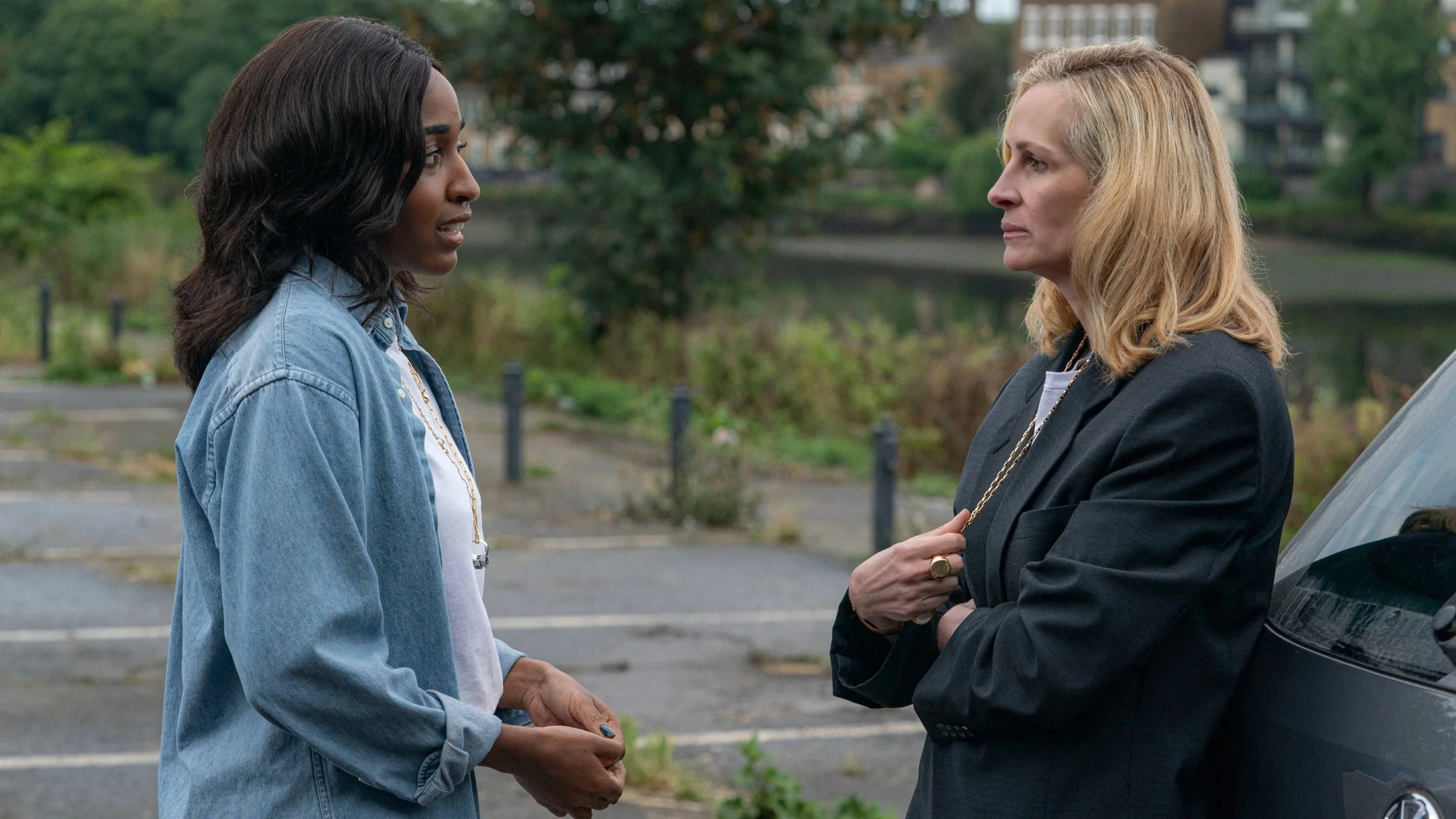
Image copyright (©) Courtesy of Amazon MGM Studios
MPA Rating: R (Language and some sexual content)
Runtime: 2 Hours and 19 Minutes
Language: English
Production Companies: Metro-Goldwyn-Mayer, Imagine Entertainment, Frenesy Film Company, Big Indie Pictures
Distributor: Amazon MGM Studios
Director: Luca Guadagnino
Writer: Nora Garrett
Cast: Julia Roberts, Ayo Edebiri, Andrew Garfield, Michael Stuhlbarg, Chloë Sevigny
U.S Release Date: October 10, 2025
After the Hunt is set around 2019. Philosophy professor Alma Imhoff (Julia Roberts) and her therapist husband, Frederik (Michael Stuhlbarg), are throwing a soiree for her students and colleagues at Yale. There is Hank (Andrew Garfield), a charming assistant professor and longtime friend known for being a flirt. Another party-goer is her mentee Maggie (Ayo Edebiri), a Black lesbian PhD student with rich parents who invest in the school and looks up to Alma to the point she questions if there's something psychosexual going on. They air their complaints about "kids these days" while engaging in lengthy, pretentious conversations about identity and generational discomfort. After the party, Maggie and Hank take off together, with Maggie offering a nightcap drink at her dorm.
The next day, Maggie goes to Alma and tells her that Hank sexually assaulted her. Alma visits Hank, who accuses Maggie of lying to undermine the fact that she plagiarizes her work and to seek an easy escape from criticism, if not worse. Meanwhile, as this "he said, she said" erupts, Alma must confront her past and relations with her traumatic experiences.
After the Hunt’s Ivy League-based Characters are unbearable.
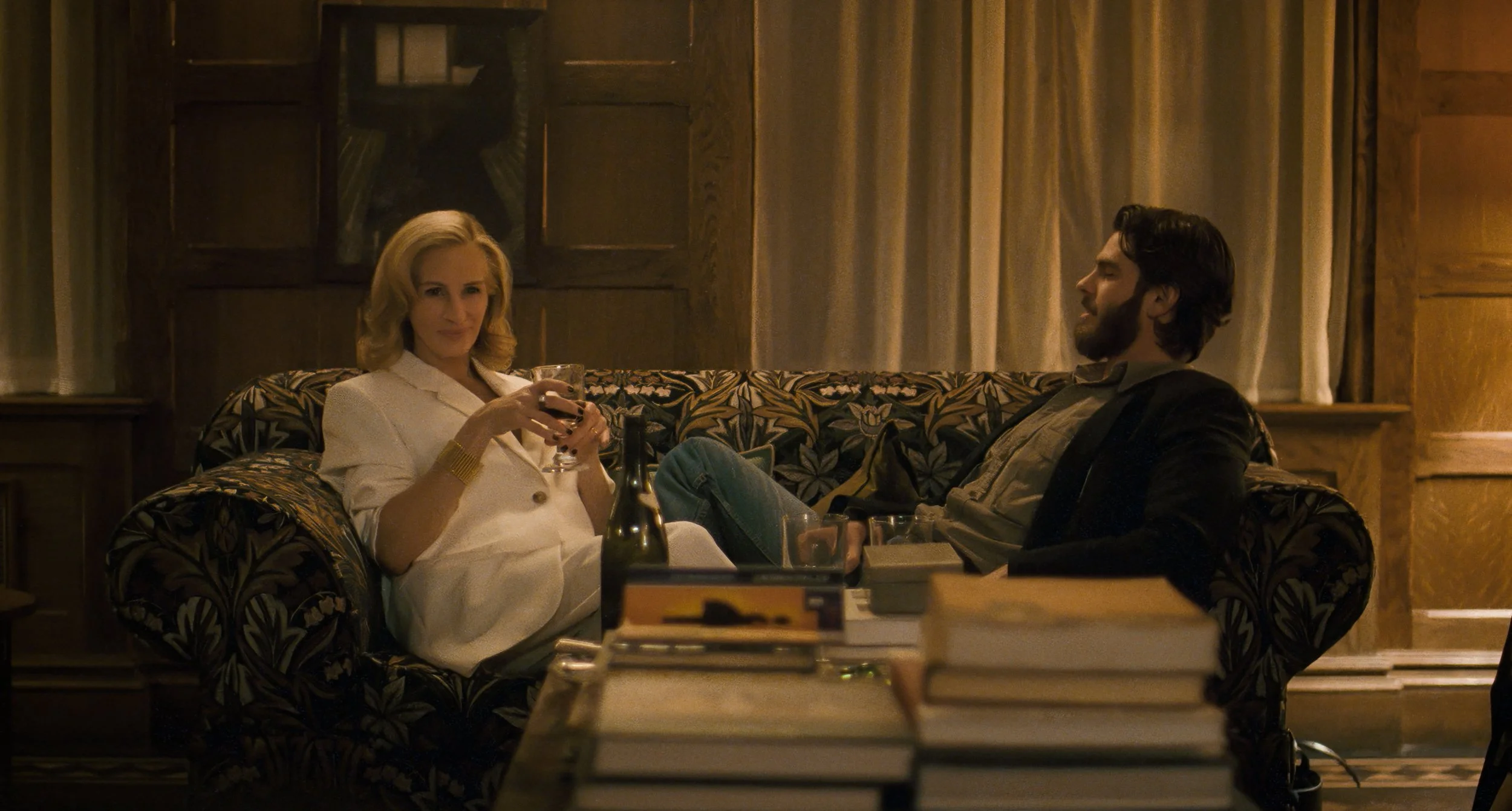
(L to R) Julia Roberts as Alma and Andrew Garfield as Hank in AFTER THE HUNT, from Amazon MGM Studios. Photo Credit: Courtesy of Amazon MGM Studios © 2025 Amazon Content Services LLC. All Rights Reserved.
I give After the Hunt this: the NYU-trained screenwriter Nora Garrett convincingly deploys a consistent wave of "Ivy League language" through her Yale setting. I use quotations because, boy, this is possibly the most insufferable body of pretentious assholes to make up a motion picture this year. Everyone is riddled with a sophisticated, upper-class vernacular that is both impressively consistent and highly intolerable. Considering that this is a Guadagnino film, known for strong character studies and contemplative themes with a touch of humor, I anticipated that the uppity language would be a mere façade. Since these people are in their own fantasy world bubble, when a real issue pops their shit, layers unfold and make them start acting like people, specifically Alma.
However, Garrett doesn't have the same prowess as David Kajganich or Justin Kuritzkes; the pompousness instilled in her characters remains their default factory setting. It has the fine beats of setting up the negative, untrustworthy facts of the accuser and the accused: Maggie being a plagiarist and Hank having aggressive outbursts. However, none of these characters resemble individuals, ultimately becoming the kind of artsy academia movie characters a satirical comedy would clown on. They’re all nondescript characters with generalized personalities loaded with the occasional outdated buzzword. It's ironic in hindsight, considering it uses "generational generalizations" as a talking point throughout. If nothing else, Andrew Garfield's depiction of Hank's straight white male crashouts and his subsequent deteriorating mental state may be the most realistic, making him the only character to seem more than just their default Yale-brainrot attitude.
Julia Roberts’ Tár-like portrayal in After the Hunt is serviceable albeit slight.
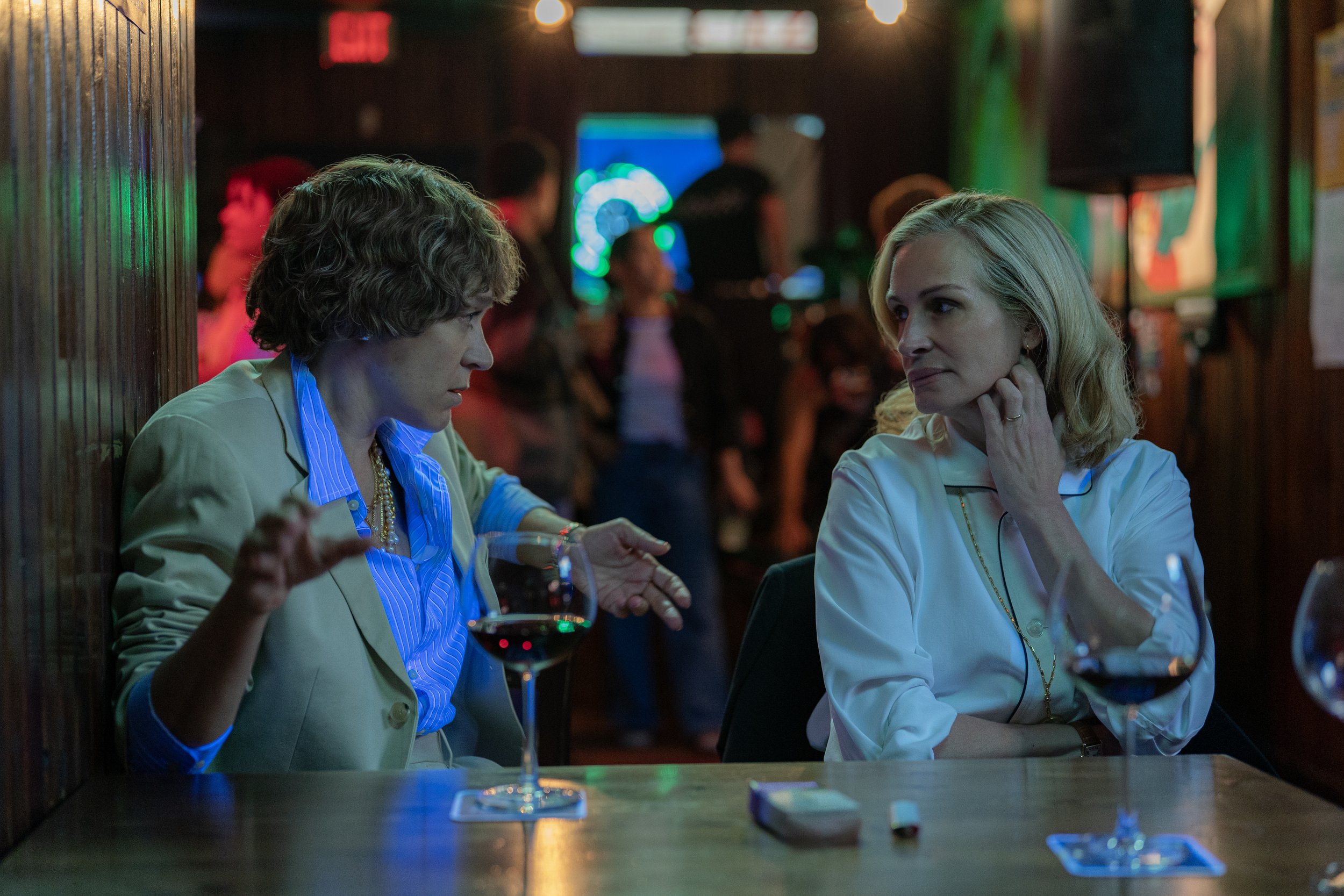
(L to R) Chloë Sevigny as Dr. Kim Sayers and Julia Roberts as Alma in AFTER THE HUNT, from Amazon MGM Studios. Photo Credit: Yannis Drakoulidis © 2025 Amazon Content Services LLC. All Rights Reserved.
Guadagnino, proving he shouldn't be helming every script he sees, furthers the film's annoying hubris. His signature contemplative style, with body language close-ups and unusually angled shots, is on display. He's aura farming, as the kids say, to amplify the already weak dialogue. But when it gets "artsy" at heightened moments, it's like he's rattling a set of keys in your face and wanting you to grab it like a baby. The film is already indecisive about its tone and topics (cancel culture, #MeToo, drug addiction, depression, mental health), feeling like a full season's worth of Degrassi.
What he and Garrett are really providing is a lesser Tár through its central portrait of Alma's navigation of the situation. She’s cold, impassive, and has slivers of good IDGAF dialogue. Julia Roberts makes the most of the weak material given, exuding Alma's intimidating demeanor and non-feminist attitude with a strong presence and subtle expressive acting. However, Guadagnino self-indulgentally assumes that because she's so unaffected, it makes for an enticing character portrait. Maggie and Hank take a backseat, and the film becomes even more misguided – much like its lead – refusing to interact with its subject until it's convenient. She struggles to maintain control as she increasingly resorts to stealing painkillers from her friend, student liaison Dr. Kim (an underused Chloë Sevigny), and escapes from her apparent trauma, which would be intriguing if it were depicted in a different film. Ultimately, the big reveal only reinforces Alma's character portrait and shows how completely uninspired Maggie and Hank are as characters.
After the Hunt arrives to #MeToo late on arrival, operating on full hubris.
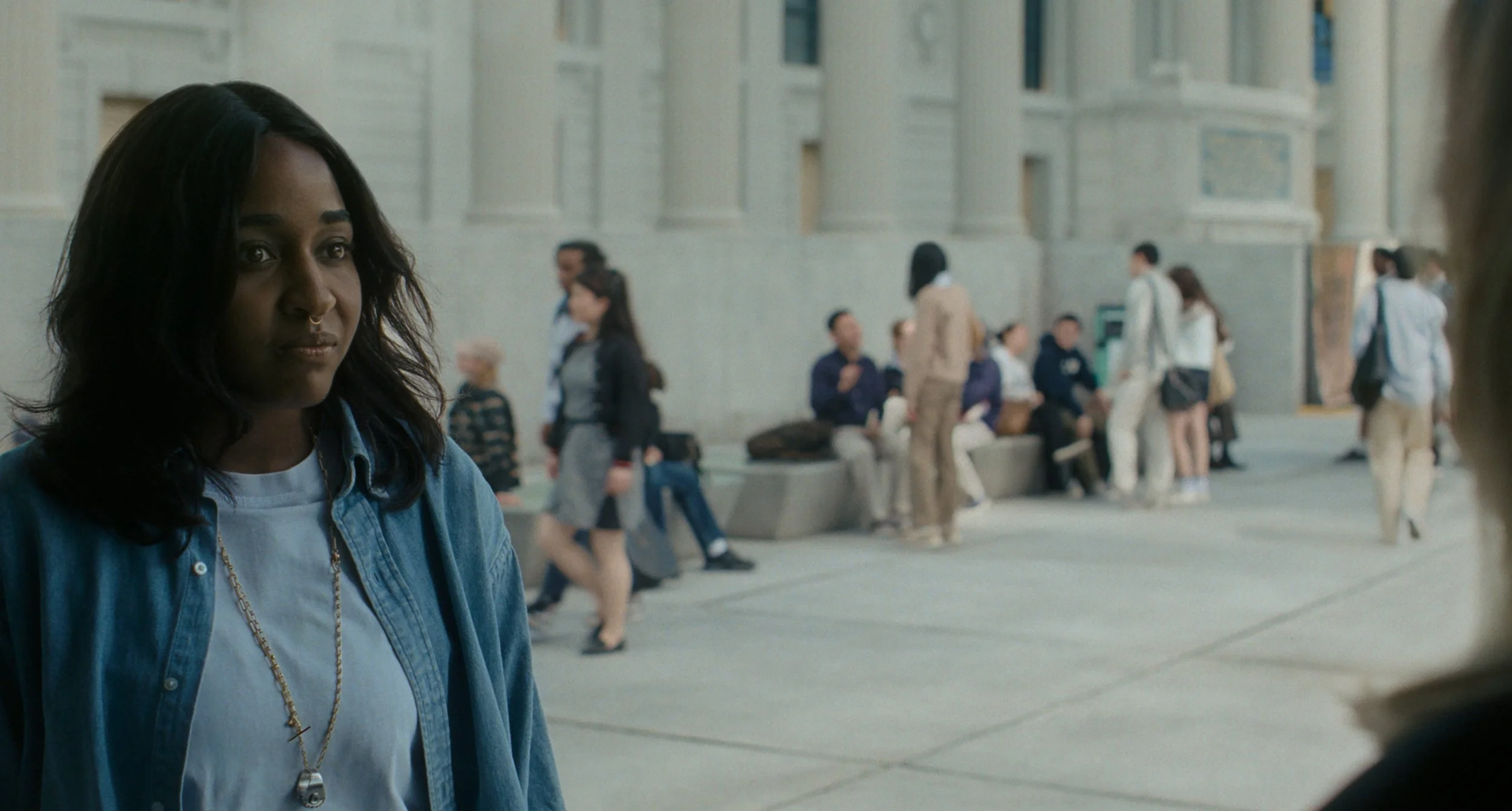
Ayo Edebiri stars as Maggie in AFTER THE HUNT, from Amazon MGM Studios. Photo Credit: Courtesy of Amazon MGM Studios © 2025 Amazon Content Services LLC. All Rights Reserved.
The neglect of Maggie's character is where I take umbrage here most. She, the sole Black character, is profoundly underdeveloped, which diminishes Ayo Edebiri's screen presence. The Gen-Z Black lesbian from a wealthy background shaking up campus is ripe with potential to stir complex cultural dynamics if it weren't in the hands of Guadagnino and Garrett. They actively display how unsuitable they are to explore the social commentary, given how much the script underutilizes her. She's the conduit of the story and actively does scummy acts. Yet, she's shoved to the back of the bus while Diet Lydia Tár muddies the whole film.
I was going to give it the benefit of the doubt until its timeskip final scene and offhanded mention of Executive Order 14151 (ending of DEI programs) as if it tackled race with the same offhanded energy as it did every other topic mentioned. That was the pretentious peak that pissed me off.
There are occasional instances to discuss the weaponized dark-sided parts of the #MeToo movement. But also, it's fucking 2025. We’ve already seen various versions of this conversation before. I'm all for a movie to tackle how facing justice for a serious action shouldn't be sensationalized, but it comes across as an artsy asshole with major "old man yelling at cloud" energy. As a result, After the Hunt may be the most egregious example of artistic hubris I have encountered this year, slightly above The Weeknd's Hurry Up Tomorrow.
Final Statement
Despite its central trio's best efforts, After the Hunt is an incoherent and dated psychodrama, bogged down by Guadagnino and Garrett's active disinterest in confronting its heavy subjects through an incorrigible, self-indulgent approach.
Please consider supporting Rendy Reviews. We’re an independent run, Gen-Z and Black-owned entertainment outlet. You can donate to our Paypal or Venmo to help keep our site running. Or become a subscriber for access to 13-years worth of reviews, exclusive interviews, and more! A free way to support is a sign up for the Rendy Reviews’ newsletter and get weekly emails about latest on movie reviews, interviews with film artisans, features, and more.
