
'Nomadland' Review
R: Some full nudity
Runtime: 1 Hr and 48 Minutes
Production Companies: Highwayman Films, Hear/Say Productions, Cor Cordium Productions
Distributor: Searchlight Pictures
Director: Chloé Zhao
Writer: Chloé Zhao
Cast: Frances McDormand
Release Date: December 4, 2020
Following the economic collapse of a company town in rural Nevada, Fern (Frances McDormand) packs her van and sets off to explore a life outside of conventional society as a modern-day nomad. The third feature film from director Chloé Zhao, Nomadland features real nomads Linda May, Swankie, and Bob Wells as Fern's mentors and comrades in her exploration through the vast landscape of the American West.
Director Chloé Zhao has the rare ability to write a dimensional character-driven drama that centers on working-class people, starring untrained non-actors to boot. It makes you wonder if what you’re watching is a narrative or a documentary because the attention to detail and authenticity is shown through her lens. All of her movies are about real people, starring real people. This is present in her previous projects, especially the acclaimed –– and damn near perfect –– 2018 feature The Rider.
Zhao’s third feature project, Nomadland, is a change of pace, for this is her first film that’s based on a novel and also her first feature led by a major professional actor (two-time Academy Award winner Frances McDormand). Nevertheless, all of her best attributes as a filmmaker and storyteller are present as she sets McDormand in the real American Midwest nomad subculture — interacting with actual nomads — while telling a poignant character-driven tale.
Based on the non-fiction novel Nomadland: Surviving America in the Twenty-First Century by Jessica Bruder, the film follows a woman named Fern, a Nevada-based working-class woman who lives in her van, taking temporary part-time service/factory jobs, traveling on her own through the West. She carries the weight of her late husband’s death alongside the downfall of her company town as an effect of the market crash of 2008. Throughout her travels, she befriends other working-class Americans who were also affected by the recession and are now content with their life on the road. The narrative chronicles her life throughout the course of a year –– what I believe should be the early 2010s –– as she makes new connections while putting her late husband’s baggage to rest.
The film itself is an observational slow burn that has the viewer follow Fern throughout the badlands of America, living her life as a nomad. The beginning of the film shows Fern taking a seasonal holiday job at an Amazon warehouse and then spending the holidays with the friendly people that she met on the road. As the new year approaches, she moves on to the next gig. Instead of chasing the average “American Dream”, she decides to live life in her own way, just like the rest of the characters introduced.
Much like The Rider, Nomadland does a great job telling a fictional narrative in such a natural, down-to-earth manner that makes you wonder if it isn’t just a cinéma vérité documentary. Zhao sets her lens on real people who play fictional versions of themselves as they share a natural chemistry with Frances McDormand. Once again, Zhao shows the lives of an unrepresented subculture — one that was affected by corporate capitalism — in a poignant, honest manner. These are a group of people who broke the chains of capitalism once it screwed them over and took their life into their own hands, becoming masters of their own fate and seeking their own happiness, which is so hard to accomplish in America.
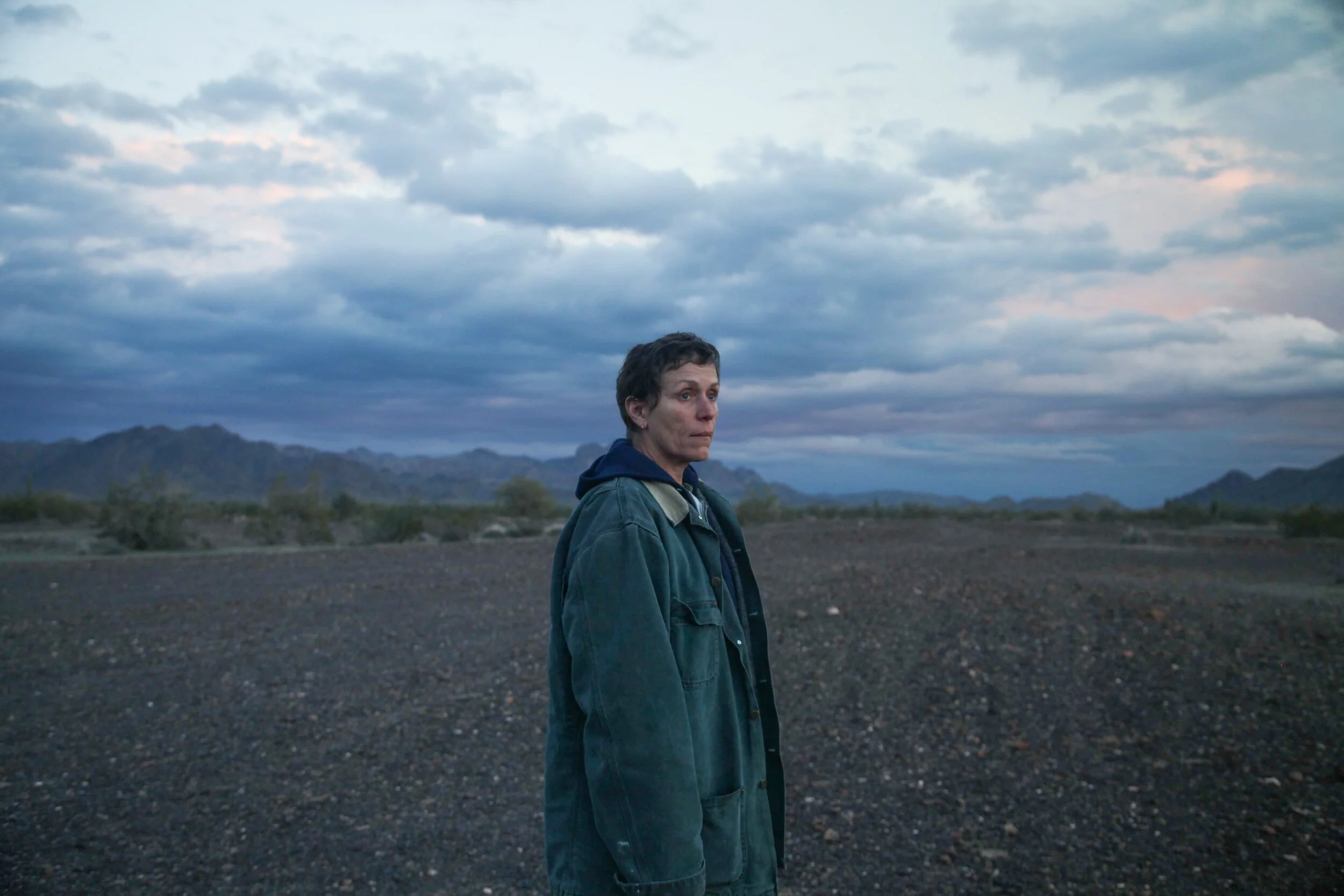
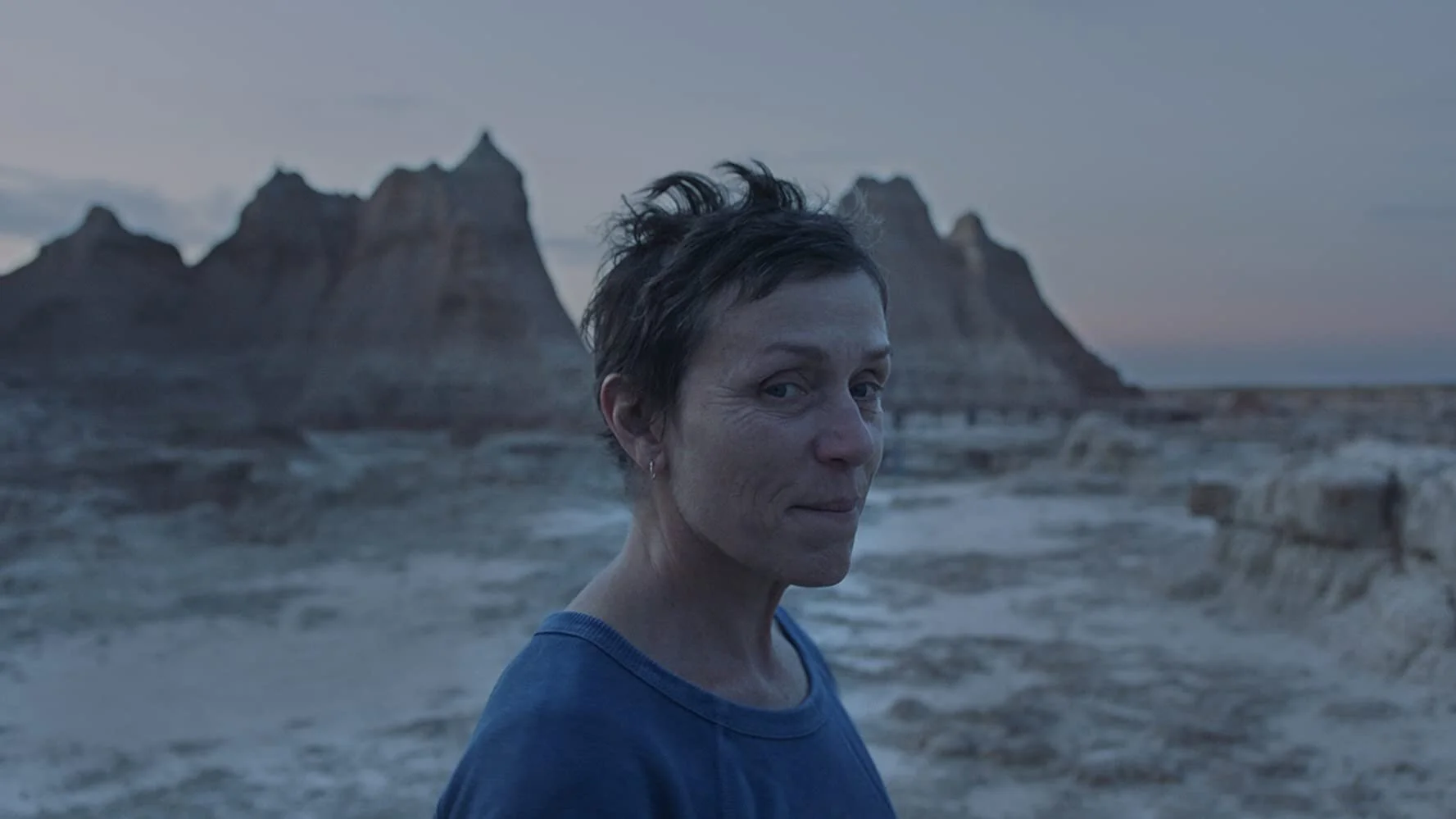
The Best Actress race is gearing up again and I feel nothing but pity for everyone who has to go up against Frances McDormand this year. Despite being great in everything from Fargo to Three Billboards Outside Ebbing, Missouri, I truly believe Nomadland is McDormand’s career-best performance. She delivers a transcendent performance as she establishes herself within a community of nomads, making the character feel even more human. You eventually forget that you’re watching Academy Award winner Frances McDormand because of the way she embodies the lifestyle through her acting. This is also bolstered by Zhao’s approach with the story and the non-actors featured in the film.
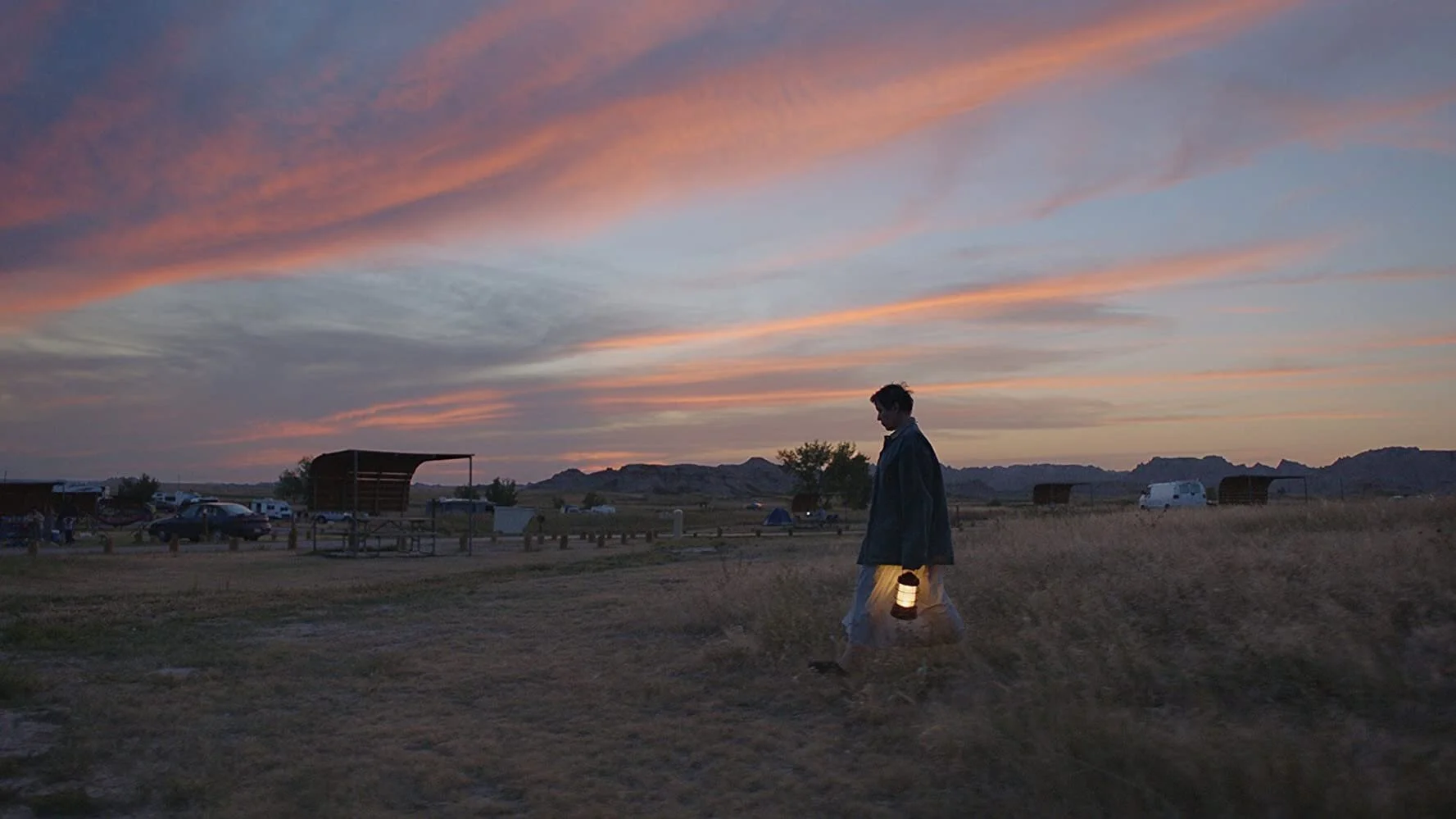
Storytelling aside, the technical aspects of Nomadland are also incredible. For starters, Zhao edited the film herself and she cut it in a way that makes you feel like you’re watching an observational documentary as she jumps through Fern’s day-to-day routines, never lingering too long on a task, but making sure the locations she explores stand out. In terms of cinematography, there are plenty of great shots taken at dawn and dusk at trailer parks. Her handheld cam helps make the film feel personal, presented in such a beautiful cinematic lens. You get serene shots of Fern exploring nature with beautiful landscapes and it exudes a content vibe. This is a style that Terrence Malick has (unsuccessfully) tried to implement in his recent features and Zhao beat him at his own game.
Chloé Zhao has proven once again that she is a powerful filmmaker and a force to be reckoned with. I really don’t like using the word “auteur” — an annoying word used far too often by film school nerds — but damn, Zhao has truly proven herself as one. She brings visibility to underrepresented Americans with such depth and care. God. Just hand her the Best Director Oscar already because this is simply remarkable. Is it better than The Rider? In my opinion, no, because I feel that story had so much going on, which made it emotionally riveting. Nomadland is a slow burn, which isn’t my forte. However, that doesn’t mean it’s not one of the year’s most extraordinary features.
Nomadland is a beautiful film that blends a poignant character study with a caring portrait of an American culture that goes underlooked, though they’re the ones most affected by the crippling American economy. It’s a human experience that depicts how home is where the heart is, presented in the most cinematic way possible.

