
In the concrete jungle set caper The Only Living Pickpocket in New York, writer/director Noah Segan trades his comedic sensibilities from Blood Relative for an old-school style love letter to John Turturro and a changing New York City. His sophmore feature follows Harry Lehman (Turturro), who spends his days lifting from wealthy train passengers to pay for his disabled wife Rosie's care, until he unknowingly robs the spoiled heir of a powerful mob family, who tracks him down and forces him on a frantic race across NYC to recover a stolen USB drive before Rosie's plug is pulled.
Segan maps Harry's journey with meticulous precision, timing real train routes across Brooklyn, the Bronx, Queens, Manhattan, and (gags) Staten Island so that every connection to get that drive back holds up (as long as Harry always makes his train, of course). Segan shot entirely on location with minimal disruption, thanks in no small part to the city’s respect for Turturro and its ever-so-beautiful urban majesty.
Per my review: “The Only Living Pickpocket in New York is a breezy, loving throwback to the kind of street-level NYC caper nobody makes anymore — anchored by a crowning John Turturro performance that reminds you why he’s one of the greats. At a brisk 85-minute runtime that never overstays its welcome, it pickpockets freshness that also steals your heart.”
Ahead of the film's wide release, I chatted with Segan via virtual interview about treating genre as a sandbox, mapping out locations like an investigation, and the everlasting friendships that brought his cast together.
This piece is a public article. However other interview pieces throughout the remainder of the year will be subscriber exclusives. If you like what you read, please consider subscribing to Rendy Reviews. We are an independently-run Black-owned film publication and need support to keep running.
This interview has been edited for clarity and length.
Rendy: Given that this is your second foray into feature filmmaking after your comedy horror [Blood Relatives], what was it like transitioning into a laid-back street-level caper?
Noah Segan: Honestly, I sort of think that everything is genre. Both movies really start off in the way I think all movies should start off: you think of a character, and you think of “What am I trying to say, or what story am I trying to tell on the most personal level?” And then you go, "Well, that's boring. Nobody wants to hear just about that." But when you wrap it in genre, you are allowed to play. You have a sandbox now. And so I always find that very enjoyable. I find it enjoyable to watch in a movie. I find it enjoyable to write. So to go from one genre to another is simply about educating oneself, I think, in “What about those genres is going to work for you?”
The film speaks true to witnessing the city and culture evolve as the ones native are trying to keep the old ways alive. What was the first instance that made you feel like Harry and helped influence or shape the character?
Well, I mean, I don't know if it made me feel like Harry when I was writing it, but I mean, the first time that I had to tap my phone to get into a subway, I was like, "What the fuck is this? What are you doing to me?" My MetroCard was bad enough. I come from tokens. So I take great umbrage with the tapping of the phone. At the same time, listen, I like all the little signs that say when the next train is coming. I don't mind that. That's the beauty of New York: it's like every time you complain about one thing, it's like they kind of give you another thing that you're like, "Yeah, it's all right." You know what I mean? I miss hailing cabs, you know what I mean? Which I never did. I never did. I could never afford a cab. So once every six months I'm hailing a cab, and I'm like, "This is great. I got money in my pocket. I'm taking a fucking cab." And now you don't do that anymore. Nobody does anywhere. You call the car.
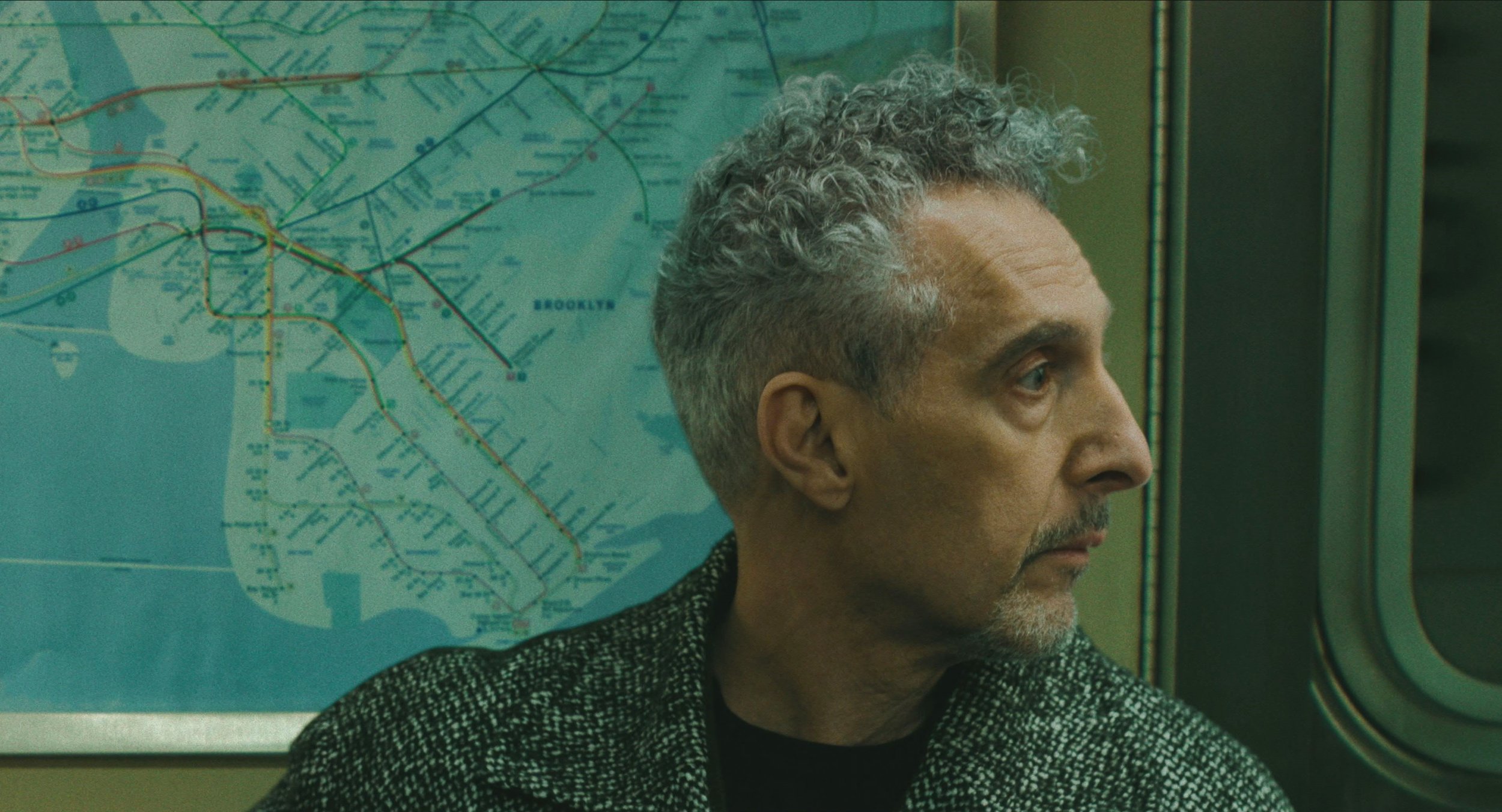
JOHN TURTURRO as Harry Lehman in ‘The Only Living Pickpocket in New York’ Courtesy of Sony Pictures Classics
And then sometimes it'll come as a New York taxi cab.
Sometimes a cab shows up. But I just remember there was something so special about hailing a cab because it was a luxury. You know what I mean? It was a luxury. I could go on and on about the things that I miss that make me feel like an old guy. But yeah. What about you?
Oh, please. The OMNY and all that's a start. Less affordable pricing in groceries. I got to see Kraft Mac and cheese go from some change into nearly $2, and then I have to go to Target for, like, "Oh wow, this is more affordable at a franchise than a Key Food." Things like that.
How did you map out the locations during the screenwriting process for Harry's physical journey running around the city?
Like I was trying to solve a serial murder. I had the... What's the meme? Do you know the meme where it's the guy and he's got all the posters up and he's got -
Yeah, Charlie Kelly, Pepe Silva, from It's Always Sunny.
Yeah. But it's like he's got some crazy name, and he's like, "I got it. I got it. I'm going." That was what my office looked like. And I decided early on, I was like, "All right, this guy's a hero. He's an anti-hero, he's a bad guy, he's doing something good, but he's got this very specific set of skills and shit that he can do." And I was like, "All right, the one thing that I'm going to make sure that this guy has is he's got a superpower where he can always make the train." And then I was like, "Okay, if he's always making the train," because nobody wants to watch a guy sit around and wait for the train. We actually do see him wait for the train a couple of times, but I was like, "All right, that's not going to be a thing. If we let him make his train, can he make all of these stops, traverse the city, and get back again in time?" And the answer is yes. And I did that math. The math holds up. I promise you. But only if he always makes his train, which of course no real person ever does. So there is movie magic.
Was it also one of those things where you had to physically be at certain locations to make sure that, okay, I could go from here to here.
I was riding trains; I was going places that I—I mean, I didn't grow up in South Brooklyn. Maybe once a year I would find myself down in Sheepshead Bay or Coney Island or something like that to do something. I don't know. But it wasn't a place I frequented. Or Belmont, the Bronx, which I never spent much time in. So I was riding around timing how long all these things would take to make sure that they held water.
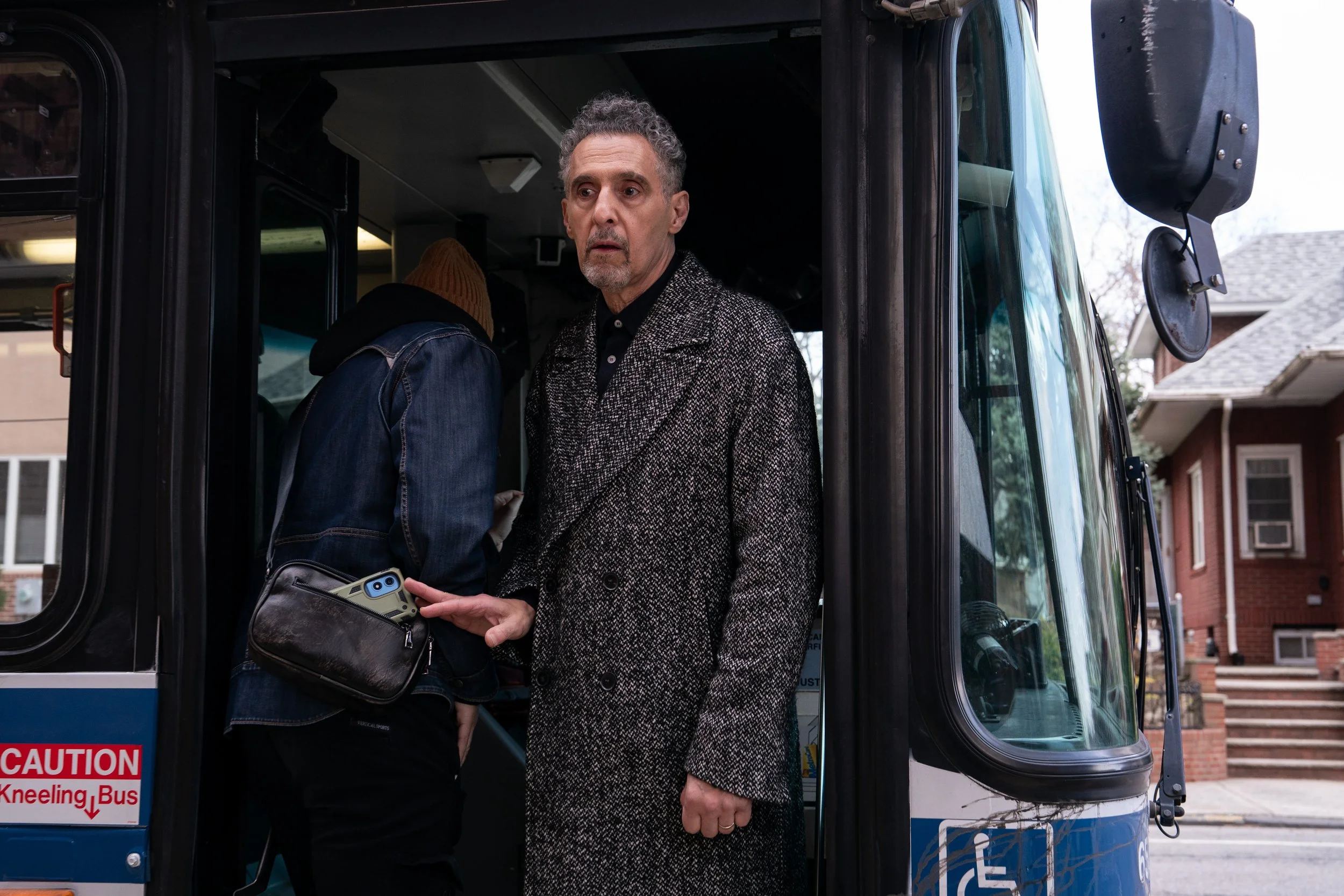
JOHN TURTURRO as Harry Lehman in ‘The Only Living Pickpocket in New York’ Courtesy of Sony Pictures Classics
There's a refreshment in the location shooting, seeing NYC without green screens or little areas of Toronto having to be standing for New York. But coming from the city filmmaker into the city, there are challenges in people being aware of who Turturro is and then also having a certain attitude when a camera is put in place. Were there any difficulties in shooting on location?
I got to say, not really, because John, Giancarlo, and Steve get a lot of respect on these streets. You know what I mean? And people come up, "Hey, how you doing? I went to high school with your cousin." or "Oh, I'm an actor. I was in this thing with you 30 years ago. What's going on?" Somebody yelling, "John, you're a legend." And that's great. You got to meet New York where New York is at. You cannot expect that you're not on a sound stage. You're not on some quiet street in another town. You are here; you're on 18th Street and 7th Avenue. What is up? And generally speaking, I think our actors, our crew, our community, New Yorkers, and everybody was cool. I mean, we shot on the subway, just got on the subway with a camera and John, and we were just shooting, and people look up; they look up from their book, whatever. "How you doing, John." I mean, John's on the subway every day. They're used to seeing him. I think it would've been weirder if it had been actors who were not New Yorkers, obviously. I think that there are great actors out there, and there are people who can try to embody that. But I don't know that on the real block, it would've had the same reaction.
In many ways, the film plays as a beautiful love letter to Turturro and his work. What was it like bringing in Giancarlo Esposito and Steve Buscemi?
I mean, these are guys who have known each other for 45 years. These are old, old, old friends. Their kids know each other. They've lived near each other. They've worked together multiple times. I mean, there is a genuine love and a friendship between these people. And so there's initially a desire to show up for one another because that's what you do. And I think the older we get, the more we realize how important it is to show up for one another. The value in that, whether it's for work or whether it's for tough times, whatever. Now that I'm an adult, I have kids. I mean, I want to show up for the people that I love. I want them to think of me that way. I want to have that foundation. And this was no different. This was no different. John was in Milan.
He had gotten invited to a fashion show, which for him is a kick, man, because that's not his usual scene. He got invited to a fashion show. Giancarlo got invited to the same fashion show, and they're there, and they're talking about this movie. Giancarlo's like, "Yeah, man, I'll show up for that. Cool. We’ve known each other long enough. I'll show up for you anytime."
Wow, that's beautiful.
Yeah. And that is how it happens. And you see it even on the other side of things when there are actors. There are younger actors who John didn't know who we found through conventional auditioning. And John would show up for the auditions, and he would read opposite actors because again, it's the same thing. If you're the kind of person who shows up for people, then all of that's on the table, and it creates a sense of camaraderie and fellowship that helps to build a team.
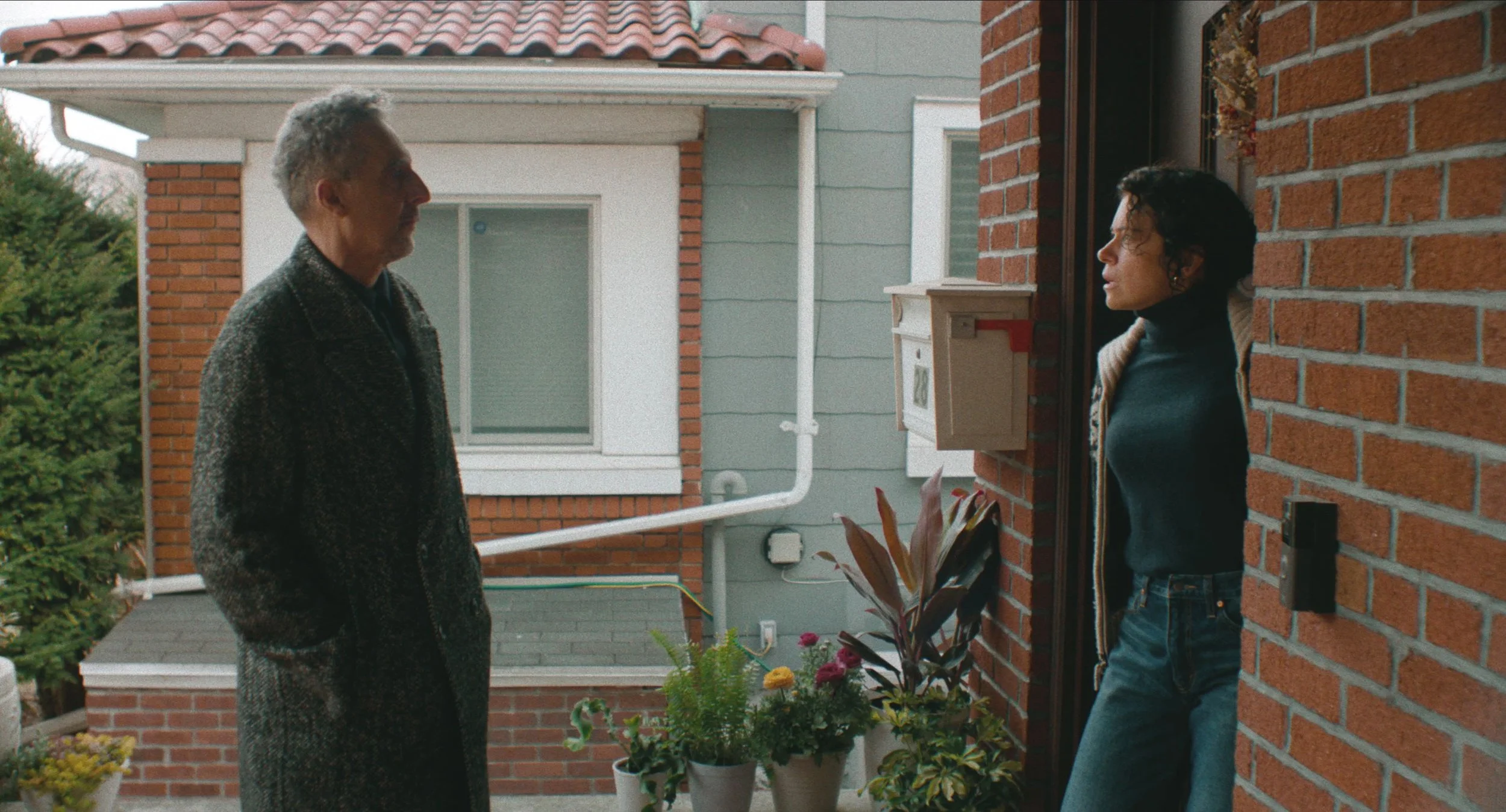
JOHN TURTURRO as Harry Lehman in ‘The Only Living Pickpocket in New York’ Courtesy of Sony Pictures Classics
Well, tell me about the chemistry between him and Tatiana Maslany, because their one scene is just so impactful and also just spells everything from who his entire past was and that aspect of fatherhood, especially coming as a father yourself. Tell me about writing that scene and seeing them together perform it.
I mean, honestly, writing that scene, it really came down to what I never want my kid to say to me. I have a mind's eye of how I want my kids to think of me, to think of me as someone who was there for them, to think of me as someone who listened to them, to think of me as someone who supported them, who helped them when they had a hard time. So it's sort of like a horror movie.
You're like, "Well, what's the exact opposite of that? What's your worst nightmare of what your kid is going to think of you?" And that lent itself to the writing, and then John and I were talking a lot about that scene, about who that actor is that was going to come out and play his daughter. John had met Tatiana but never worked with her, was a little familiar with her work, but was aware of her as an actor.
I had worked with her 10 years previously on a music video, and I still had her number, and we had remained slightly in touch, but never hung out. She's busy, I'm busy, and life goes on and stuff. But I sent her a random message, and I was like, "Hey, it's been years since I've talked to you. I hope you're well. I'm directing a movie, John Turturro." And I didn't even finish John Turturro. She was like, "I'm there." Because that's John. People want to be with him, want to be around him, want to play this game with him, and want to make this art with him. And so she showed up, man, and it was incredible. I mean, she showed up, and they did not rehearse. They did not want to rehearse. I said, "That's fine. We're not going to. We're going to let it refine itself." They're both very prepared actors.
They both spend a lot of time in the theater, know their shit, and let it flourish. Even if you only do a few takes, you're still shooting many different angles. We were able to get into the scene, and because the blocking was simple, we weren't like, "All right, we moved over here, now we have to move over here." We could let things be a little bit more fluid depending on what was important in the scene and moments we wanted to get, but really it was just about letting them make a choice about how that relationship was going to be shown.
Now they both have two movies together.
Yeah, and a play, and they've done a play together. It's incredible.
Wow. And you started it all.
I'll take credit. I'm going to take credit for that.
When carving out the ending, which is such a beautiful, well-written exchange of two classic old-school minds meeting each other where they're at, were there different variations of where Harry's fate was going to be at the end of the film?
There were no variations in the writing or the shooting or the editing of the ending of the movie. The ending of the movie has been rather consistent. I mean, there were some editorial choices for the sake of whatever, I guess, art. There were some artistic choices, but in terms of the beats that we see in this, there's no alternate anything.
Thank you for your time. I can't wait to see it again in a nice little Brooklyn art house theater. The BAM cinema is right there.
Well, I know I got to shout out Diego [Turturro], who is John's son, who is now working at Sony Pictures Classics, and he was like, "We got to get at BAM." And we were like, "Diego, he's a young guy. He's getting started on stuff, and he's working over at this distribution company that's been taking care of us." And he's like, "You know what? I'm going to speak up. I'm going to say we got to get to BAM." And they did, and they did. So it's a family affair over here.
The Only Living Pickpocket in New York is now playing in theaters nationwide across the U.S.
